
OEM, Aftermarket, or Recycled: What Parts Go on Your Car After a Collision
Reese Calder · Service Writer, Ultimate Car Care Group · September 3, 2026 · 7 min read
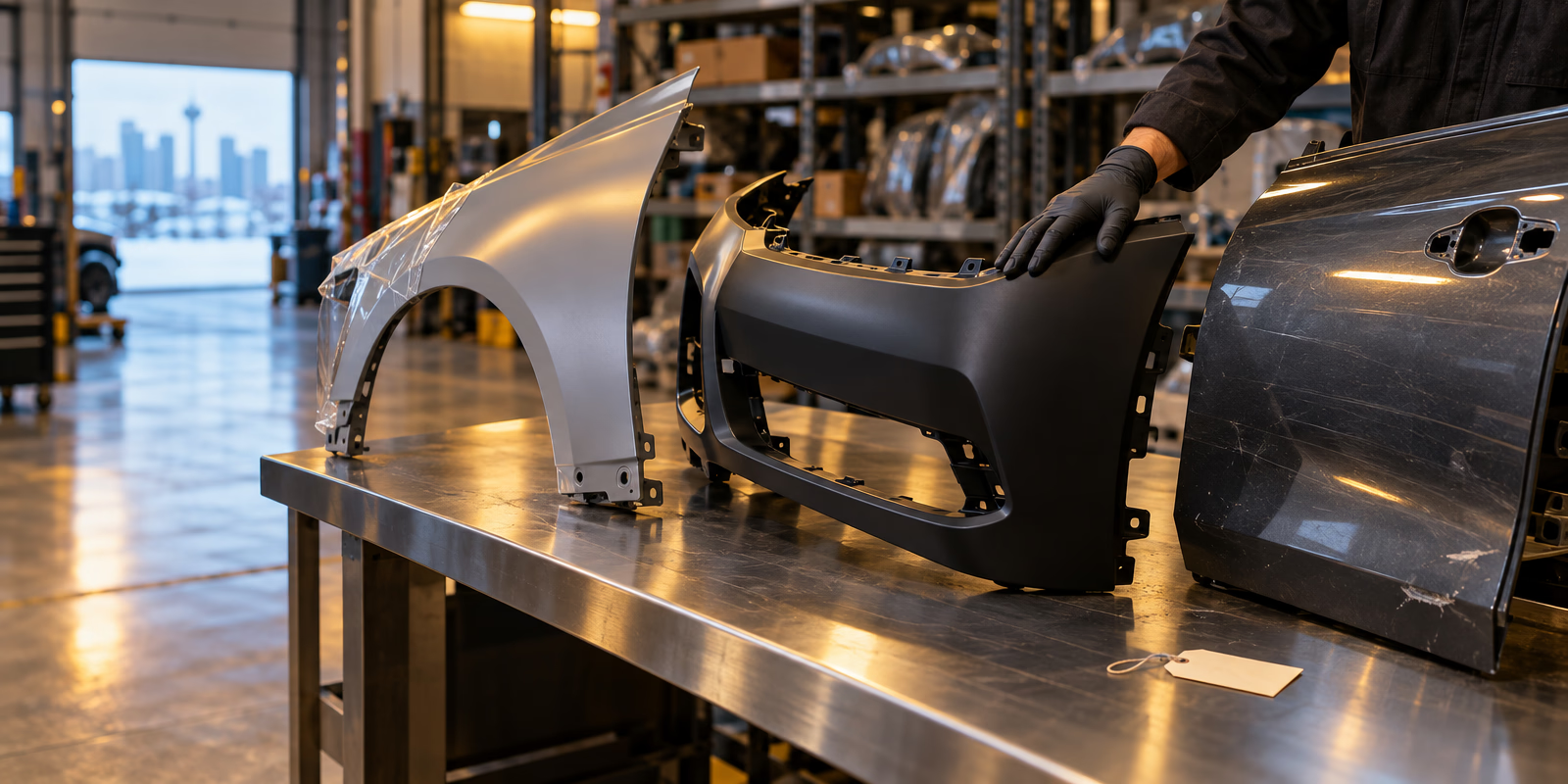
Every collision estimate has a parts list, and every line on it names a part type. Most drivers skip that column and go straight to the total. It matters more than the total does, because the part type sets the price, the lead time, and sometimes whether a panel gap still looks right in two years. Here is what each type is, where our parts team draws a hard line, and what your insurer will usually agree to pay for.
What each part type actually is
| Part type | Where it comes from | Fit and finish | Common use |
|---|---|---|---|
| New OEM | Made by or for your vehicle's manufacturer and sold through the dealer network | Matches the factory panel exactly, including primer and mounting points | Safety systems, structure, newer and leased vehicles |
| Certified aftermarket | An independent manufacturer, tested and certified by a program such as CAPA | Close to factory on a certified part, unpredictable on an uncertified one | Bumper covers, fenders, grilles, lamps on older vehicles |
| Recycled (used OEM) | A genuine factory part pulled from another vehicle of the same model | Factory fit, though colour and age vary by donor | Discontinued parts, older vehicles, doors and quarter panels |
Recycled parts confuse people because the word sounds like the budget option. They are used, but they are original manufacturer parts, so the stampings and mounting points are exactly right. On a twelve-year-old sedan, a clean recycled door often finishes better than a new aftermarket one does. On a two-year-old vehicle, a recycled part in the right colour and condition is much harder to find.
Some parts carry a safety job, and we specify new OEM for them every time, on every vehicle:
A cheap bracket can move a sensor
The radar behind your grille only works if it sits where the manufacturer put it. A bracket a couple of millimetres out of position can throw automatic braking off aim, and nothing on the dash tells you. That is why a front-end repair on a driver assistance vehicle ends with an ADAS calibration rather than a quick road test.
Alberta policies vary, so the real answer sits in your wording, but the pattern is consistent. Newer vehicles, often those still inside the factory warranty, commonly get new OEM parts. As a vehicle ages, insurers move toward certified aftermarket and recycled parts for cosmetic panels. Your adjuster sets the parts allowance and your estimate shows the type approved on each line. Check your policy, and ask before repairs start.
Four questions worth asking your adjuster:
Usually yes. If your insurer approves a certified aftermarket fender and you want the factory one, you cover the gap between the two part prices plus any change in labour. We write both numbers on the estimate so you see the real spread before you decide. On a bumper cover the difference is often small. On a hood or a headlamp assembly it can run several hundred dollars.
Parts lines get abbreviated. New OEM usually reads as OEM or NEW, aftermarket as A/M or QRP or CAPA, and recycled as LKQ or USED. Beside each part sits its price, then a separate line for the labour to fit it. If a line is unclear, ask your estimator to say it in plain words. Our walkthrough on how to read a collision repair estimate covers the rest of the columns.
Two warranties run side by side. Our workmanship warranty covers the repair itself: the fit, the refinish, the blend. The part carries whatever its maker offers. A new OEM part carries the manufacturer's coverage. A certified aftermarket part carries a limited warranty from the supplier. A recycled part often carries the shortest term of the three. We tell you which one applies before anything is ordered.
I had a terrific experience at Ultimate Car Care Group Country Hills. They did the work that was required, and helped me save money by finding an aftermarket taillight for a repair unrelated to the insurance claim. They listened to my concerns about a missing clip and scratch, and promptly made it right.
Certified aftermarket parts are tested for fit, materials, and corrosion protection, and on cosmetic panels they hold up well. Uncertified parts are the gamble, because nothing independent checks the steel thickness or the primer. We do not use aftermarket parts for airbags, structural sections, or sensor mounts, whatever an estimate says.
A body panel will not void your powertrain warranty. The risk is narrower than people expect: a manufacturer can decline a claim on a part it did not build, or on damage that part caused. If your vehicle is new or leased, ask the dealer and your leasing company before you agree to non-OEM panels.
They arrive in the donor vehicle's colour, so they get prepped and refinished to match your car the same way a new panel does. The blending work is identical, which is why a recycled part saves on the part price but not on the paint labour. We explain colour matching in our paint matching post.
In Alberta you choose the repair shop. Parts are a conversation between you, your adjuster, and the policy wording, and you can pay the difference to upgrade a line. Bring the estimate in and we will walk the collision repair parts list with you before anything is ordered.
Want to see the parts list before it is ordered?
Book a free estimate and we will go through every parts line with you, type by type, and tell you where an upgrade is worth paying for.
Book a Free EstimateAbout the author
Reese Calder · Service Writer, Ultimate Car Care Group
Reese is the service writer for Ultimate Car Care Group and writes the blog from inside the three Calgary shops, translating what the estimators, body techs, glass installers, and detailers see every day into plain answers for drivers.
Body labour, refinish hours, OEM or recycled parts, paint materials, sublet, betterment. Here is what each line on a Calgary collision repair estimate means, why the number can move after teardown, and the questions worth asking before you sign.
Calgary wind and wet snow bring branches down on parked cars every year. Here is why falling-tree damage is a comprehensive claim and not a collision one, what to document before the tree is moved, and why roof and pillar damage needs structural checks even when it looks cosmetic.
Bumper damage ranges from a scuff you can polish out to a full replacement with sensors behind it. Here is an honest Calgary cost breakdown, when a bumper can be repaired instead of replaced, and why modern bumpers cost more than they used to.