
Paint Matching: How a Repair Disappears Into Your Car's Colour
Reese Calder · Service Writer, Ultimate Car Care Group · August 17, 2026 · 6 min read
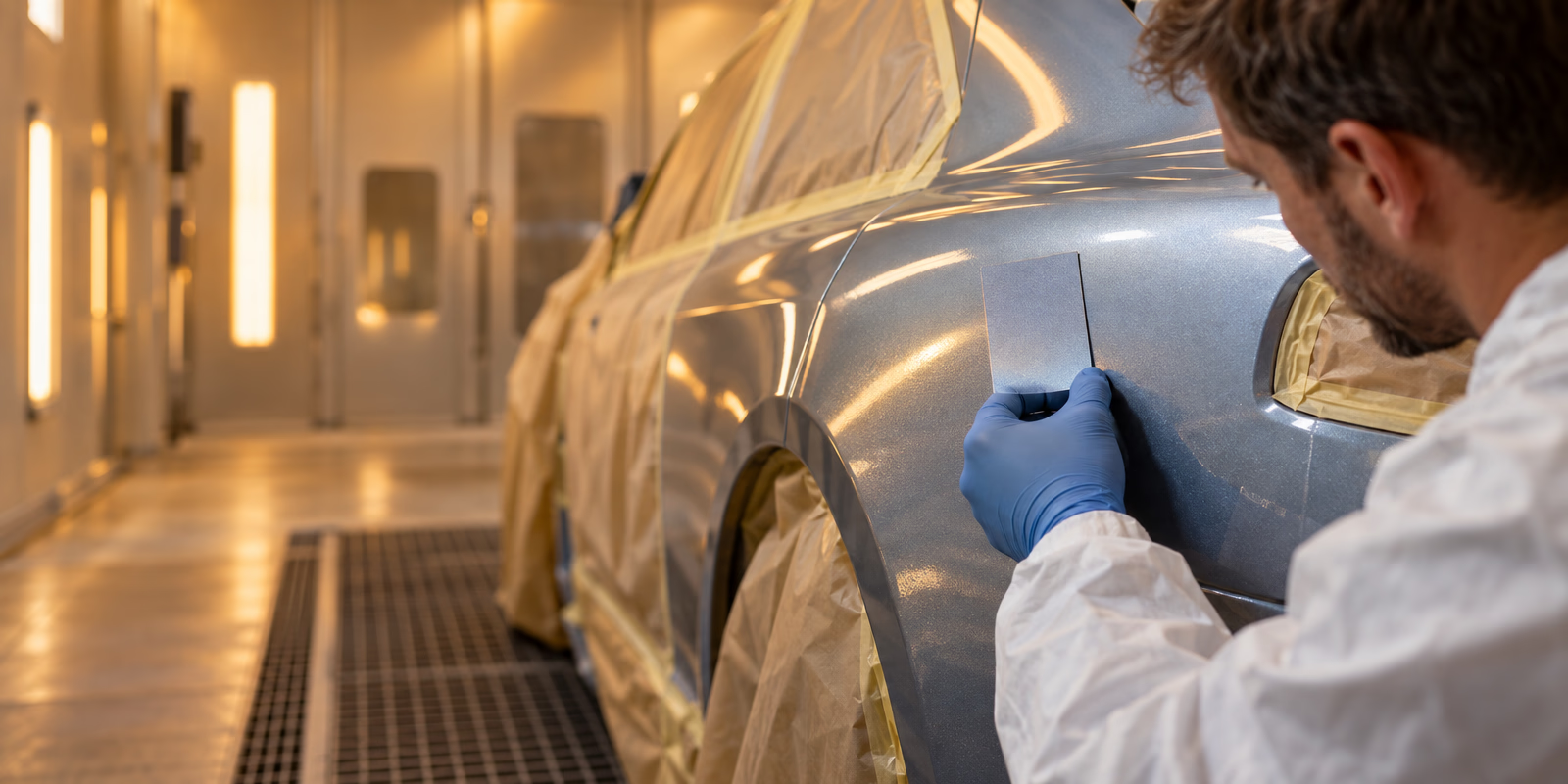
A customer once told us we had performed a magic show on his car. Nothing magic happened in the booth. The repair disappeared because the colour on the new part matched the colour on the panel beside it, in daylight, at every angle you can walk past it. That match is the hardest part of most collision jobs, and it is the first thing a driver checks. Here is how auto painting actually gets a colour right.
Every vehicle carries a paint code on a sticker, usually in the driver's door jamb, under the hood, or in the glovebox. That code tells us what the factory sprayed the week your car was built. It does not tell us what your car looks like today. Alberta sun, road salt, and four years of car washes shift a finish slightly, and the factory often sprayed several accepted variants of the same code across different plants.
Getting the colour right is a measured process, not an eyeball guess:
Why a card, and not the car
Paint reads differently wet, dry, and cured, and a metallic looks different depending on how the flake lands. A spray-out card costs a few minutes and a little material. Spraying straight onto the panel and hoping costs a repaint. The card is how a painter proves the mix before it touches your vehicle.
A hard colour edge at a body gap is the giveaway in a cheap repair. Even a good mix reads slightly different beside older paint under a low Calgary sun. So our painters carry the new colour out into the next panel, fading it into the existing finish, then clear the whole area as one. The transition lands in the middle of a panel where your eye has nothing to compare it against. That is why a single door repair often involves the fender beside it.
Colour is only the base. Clear coat gives the finish its depth and takes the UV and the stone chips, and it needs time to flash between coats before it bakes in the booth. After the bake, the panel gets polished to match the texture next to it, because factory paint carries a slight orange peel and a glass-smooth patch would stand out as much as a colour miss. Our collision repair schedules build that cure time in.
What the finish on your car adds to the repair
| Finish | What it is | What it means for the repair |
|---|---|---|
| Solid colour | One coloured base under clear coat | The easiest match. Fewer variants and less blending. |
| Metallic | Base loaded with aluminum flake that changes tone with the viewing angle | Spray technique has to lay the flake the same way the factory did. |
| Pearl | Base with mica pigment that shifts colour as well as brightness | More spray-out cards and more blending into the neighbouring panels. |
| Tri-coat, often whites and reds | A ground coat, a translucent pearl mid-coat, then clear | Three passes instead of two. Mid-coat thickness changes the colour, so cards are not optional. |
That extra work is why a tri-coat white carries more refinish hours than a solid grey on the same door. The ranges in our guide to repainting a car in Calgary already reflect it, and a proper estimate lists the extra time as refinish labour instead of burying it in a round number.
I understand that magic is usually illusionary or for fun but I've gotta say they performed a magic show on my car repair.
We read the faded panel itself rather than trusting the factory formula, then tint the mix toward what the vehicle looks like now. On heavily faded paint we say up front that blending into the next panel or two is the only way to make the repair invisible, and we show you the spray-out card before anything gets sprayed on the car.
Yes, though the code makes it quicker. The spectrophotometer reads the panel directly, so a formula can be built from the vehicle itself. We still hunt for the sticker in the door jamb or under the hood, because it tells us which factory variants to compare against first.
Because that is how the repair disappears. Blending the new colour into the adjacent panel puts the transition where no body line draws your eye. Insurers expect blend time on metallic and pearl finishes, and it shows on the estimate as its own refinish line rather than an extra.
Our refinishing carries a lifetime workmanship warranty for as long as you own the vehicle, covering defects in the work such as peeling or bubbling. What our repair guarantee actually looks like walks through how a claim on it works.
Want the repair to disappear?
Book a free estimate and our painters will walk you through the colour plan for your vehicle before any work starts.
Book a Paint EstimateAbout the author
Reese Calder · Service Writer, Ultimate Car Care Group
Reese is the service writer for Ultimate Car Care Group and writes the blog from inside the three Calgary shops, translating what the estimators, body techs, glass installers, and detailers see every day into plain answers for drivers.
From a single panel touch-up to a full bare-metal respray, here's an honest cost breakdown of car painting in Calgary, when each option makes sense, and how to avoid the bargain-shop horror stories.
A customer picked up his car and the paint finish was not right. He brought it back, and it was redone in a day and a half. Here is what our lifetime workmanship warranty covers, what it does not, and what to do if something is off after you pick up.
Run a fingernail across the scratch. That ten-second test tells you whether you are looking at a twenty-minute polish, a touch-up, or a panel repaint, and this guide puts a Calgary number beside each one.