
Car Scratch Repair in Calgary: Buff It, Touch It Up, or Repaint It?
Reese Calder · Service Writer, Ultimate Car Care Group · September 10, 2026 · 7 min read
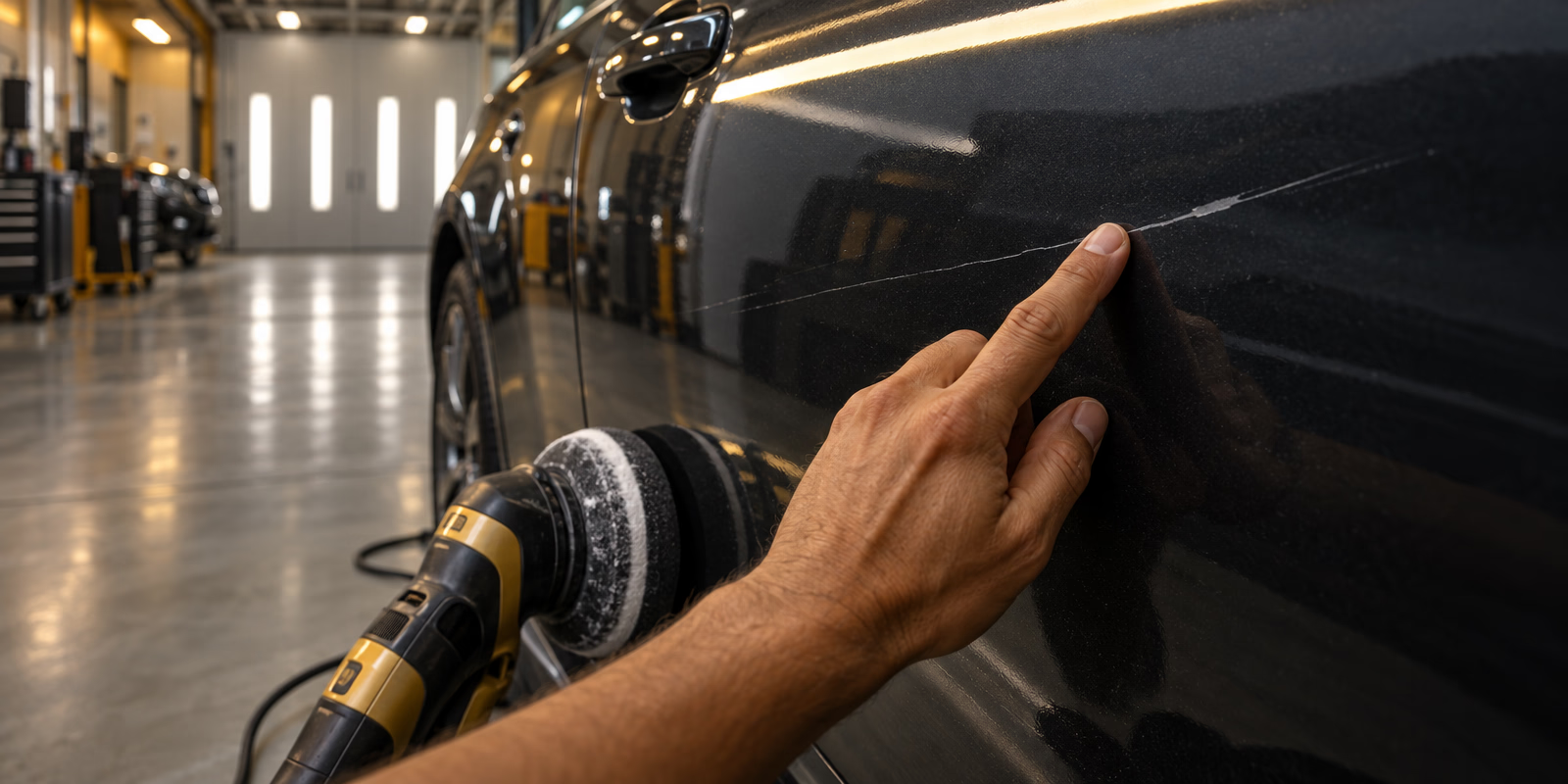
A scratch that looks terrible in a parking lot can turn out to be nothing, and a faint line you barely notice can turn out to need a repainted door. The difference is depth, and you can test it yourself in ten seconds with a fingernail. Here is how to read what you have, what each level of damage actually needs, and roughly what each one costs in Calgary.
Wash the area first, because road film exaggerates everything. Then drag a fingernail slowly across the scratch, at a right angle to it. If your nail glides over with no catch, you are in the clear coat. If it catches a little, you are into the colour. If it drops in and you can feel a sharp edge on both sides, the scratch is through to primer or to the metal underneath.
Factory paint is four layers stacked on the panel, from the outside in:
Ranges below come from our repaint cost guide and bumper cost guide. Your vehicle and damage may land outside them.
| What you have | Fingernail test | The fix | Typical Calgary range |
|---|---|---|---|
| Clear coat scuff or paint transfer from a post | Nail glides across | Machine polish or compound | Usually a detailing cost, not a body repair |
| Into the base coat, colour still in the groove | Nail catches slightly | Touch-up, or a blended spot repair | $150 - $800 |
| Through to primer, grey or white showing | Nail catches clearly | Spot repair, or a panel repaint | $300 - $1,800 |
| Bare metal, or a key line down a door | Nail drops in, sharp edges | Panel repaint blended into the neighbours | $700 - $1,800 per panel |
| Bumper scrape with a dent in the plastic | Nail catches, cover is deformed | Plastic repair and refinish the cover | $500 - $1,200 |
Most of what people call a scratch is paint transfer: the other object left its colour on your clear coat and took nothing of yours. White marks from a garage post or a shopping cart are the classic version. A machine polish cuts a few microns off the clear coat and the mark disappears. Our detailing team does this without the panel ever entering a paint booth.
Clear coat is not infinite
Every compounding pass removes a little clear coat, and there is only so much on a panel. Buffing the same spot two or three times over the years, or leaning on a rotary too hard once, burns through to the colour. That turns a polish into a repaint, so this is not the place for a driveway experiment with a cheap kit.
Once the nail catches, polishing will not fill anything. Small chips and short nicks get a touch-up: colour mixed to your vehicle's paint code and applied by hand, then levelled flat and sealed with clear. It looks close in normal light and almost vanishes at arm's length. A longer scratch in a flat area gets a spot repair instead, sprayed into the damage and blended outward so no edge shows.
A key line along a door, or a deep gouge that has exposed metal, needs the panel refinished. The area is sanded and primed, the colour is mixed to your paint code, and the new paint is blended into the adjacent panels so the transition is invisible. That blending step is what separates a repair you cannot find from one you spot in the sun, and it is covered in how we make damage disappear.
Bare metal also puts a clock on the job. Alberta winters mean brine on the road for months, and an exposed steel edge will start rusting under the surrounding paint. Once rust creeps under the clear coat, a one-panel repair becomes bodywork. If you can see shiny metal or an orange stain forming, book the auto painting estimate now rather than in spring.
A bumper cover is flexible plastic, so it absorbs scrapes that would gouge a steel door, and it often scuffs and deforms at the same time. Plastic can be repaired and refinished rather than replaced, which keeps the cost down. The complication is what sits behind it: parking sensors, a camera, or radar. Our bumper cost guide breaks down when a cover is worth repairing and when it gets replaced.
My car had some scratches from a post I dinged in a garage. Took it to Ultimate Car Care Group and they told me it wasn't actually scratched but scuffed with the surface paint from the post. They took it into their shop and buffed out the surface paint.
On a small chip, yes, and it beats leaving bare metal exposed through a winter. On a long scratch, a pen leaves a raised ridge of paint that catches light and looks worse than the scratch did. Use a pen to seal chips, and bring anything longer than a fingertip to a shop.
Yes, on a properly blended repair. We pull your paint code, mix to factory spec, and fade the new colour into the panels beside it. Heavily sun-faded original paint is the one genuinely hard case, because the surrounding panels have drifted from the factory colour, and we will tell you up front if that applies.
Often not. Most single-panel scratch work lands near or below a typical deductible, so paying out of pocket keeps your claims history clean. A keyed vehicle with several panels damaged is a different conversation. Get the written estimate first, then decide with a real number instead of a guess.
A polish or a touch-up is usually same day. A blended spot repair is often a day or two. A full panel repaint typically runs two to three working days because the colour needs to cure between coats. We give you the timeline with the estimate before you commit.
Not sure how deep your scratch is?
Bring it in for a free estimate. We will tell you honestly whether it polishes out or needs paint, and what each option costs.
Book a Free EstimateAbout the author
Reese Calder · Service Writer, Ultimate Car Care Group
Reese is the service writer for Ultimate Car Care Group and writes the blog from inside the three Calgary shops, translating what the estimators, body techs, glass installers, and detailers see every day into plain answers for drivers.
From a single panel touch-up to a full bare-metal respray, here's an honest cost breakdown of car painting in Calgary, when each option makes sense, and how to avoid the bargain-shop horror stories.
Matching your car's colour takes more than punching a paint code into a mixing machine. Here is how our painters read the actual panel, prove the mix on a spray-out card, and blend the new colour into the panels beside the repair so the edge never shows.
Three products, three different jobs, and a lot of confusion about which one stops rock chips. Here is an honest comparison for Calgary roads: what each one protects against, what none of them stop, how long each lasts, and which combination fits your driving.