
Ceramic Coating vs PPF vs Wax: What Actually Protects Paint in Calgary
Reese Calder · Service Writer, Ultimate Car Care Group · August 6, 2026 · 8 min read
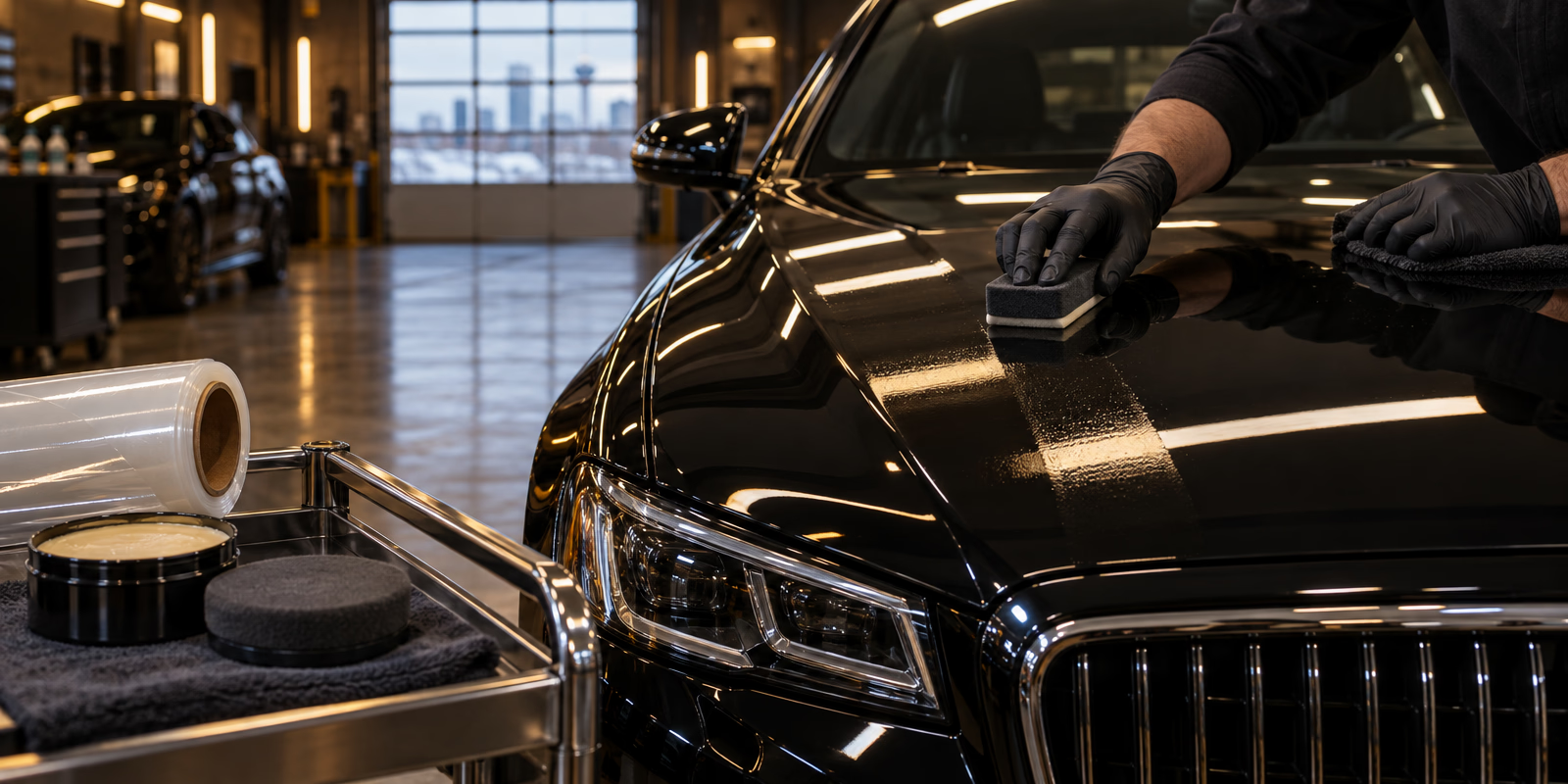
Wax, ceramic coating, and paint protection film get sold as if they are three price points for the same thing. They are not. One is upkeep, one is a chemical barrier, and one is physical armour, and the most common mistake Calgary drivers make is buying the wrong one for the damage they are actually worried about. Here is what each product does on our roads, and what it will not do no matter what the bottle says.
What each product is actually for
| Product | What it protects against | What it does not stop | Typical life |
|---|---|---|---|
| Wax or spray sealant | Water spotting, light road film, easier washing | Rock chips, swirls, real UV fade | Weeks for wax, a few months for a sealant |
| Ceramic coating | Bird droppings, road salt film, chemical etching, UV fade | Rock chips and dents | Typically 2 to 5 years |
| Paint protection film | Gravel chips, rock strikes, light scratches that self-heal | Hail dents and heavy impacts | 8 to 10 years in our climate |
Read that table one more time and the decision gets easier. If your worry is the constellation of chips on the hood after a winter of highway driving, only film addresses it. If your worry is that the paint looks dull, feels rough, and takes an hour to wash, that is a coating problem. Wax is maintenance between details, not protection, and it is the product most often oversold as protection.
A carnauba wax lays a thin sacrificial layer over the clear coat. It beads water, adds warmth to the colour, and makes the next wash easier. It also wears off in weeks, faster if the car lives outside through a Calgary winter and goes through a touchless wash every Saturday. A synthetic spray sealant lasts a few months instead. Neither one stops a stone off the truck ahead of you on Stoney Trail.
A ceramic coating bonds to the clear coat and stays there for years rather than weeks. It resists the things that chemically attack paint here: road salt film, magnesium chloride brine, bird droppings baked on in July sun, and the UV that fades red and black vehicles fastest. It is strongly hydrophobic, so dirt releases in the wash instead of needing to be scrubbed, which itself prevents the swirl marks that come from hard washing.
A coating does not stop a rock
This is the single most common misunderstanding we hear at the detail bay. A ceramic coating is measured in microns. Gravel off a highway at 100 km/h goes straight through it into the clear coat and sometimes the primer. If your hood already has chips, a coating will make it glossier without doing anything about the next one.
Paint protection film is a self-healing urethane, roughly 6 to 10 mil thick, applied clear over the paint. It absorbs the impact energy that would otherwise chip the clear coat, and light marring in the film itself disappears with sunlight or warm water. That thickness is the whole point: it is the only one of the three products with enough mass to take a gravel strike. We go deeper on coverage packages and value in our post on whether PPF is worth it in Calgary.
Be clear on the limits before you spend anything:
The packages our customers actually land on
| How you drive | What we suggest |
|---|---|
| Daily highway commute on Deerfoot or the QEII | Partial front film on the hood edge, bumper, mirrors and headlights, ceramic coating over the rest |
| New vehicle you plan to keep five years or more | Full front film, ceramic coating everywhere, maintenance detail every six weeks |
| Mostly in-town driving, older vehicle | Ceramic coating after a paint correction, skip the film |
| Lease you hand back in three years | Film where the turn-in inspector looks, which is the front end |
| Selling inside two years | A full detail and a sealant, save the film money |
| Truck or SUV doing gravel-road duty | Fuller film coverage including rockers and the leading edge of the roof |
A partial front film package starts in the low four figures, a full front costs more, and a full-body wrap is a custom quote on your specific vehicle. Ceramic coating is quoted with the paint correction it needs underneath, and it goes on at a reduced bundled rate when it is installed at the same visit as film. Wax is an add-on to a detail, and a full detail in Calgary runs $200 to $500 or more depending on the condition we start with.
Prep is most of the value
Film and coating both lock in whatever is underneath them. On a used vehicle we start with a decontamination wash and, where needed, a paint correction to pull out swirls and oxidation before anything goes on. A cheap install over unprepped paint is the one way to spend four figures and end up worse off than before.
Yes, and a lot of customers do. The coating goes over both the filmed and unfilmed panels so the whole vehicle behaves the same in a wash and looks consistent in the sun. It also makes the film itself easier to clean and helps it resist staining at the edges.
No. Wax over a ceramic coating mostly sits on top and masks the hydrophobic behaviour you paid for. Maintain a coated vehicle with a pH-neutral wash and an occasional coating-specific topper, which we do as part of a maintenance detail.
Often yes, if the paint is sound. The correction step alone makes a ten-year-old finish look dramatically better, and the coating holds that result for years instead of months. If the clear coat is already peeling or failing, coating it will not save it and the honest answer is refinishing.
Film on the front end, if chips are what bother you. Coating, if what bothers you is dullness and washing time. That is the entire decision, and we will tell you on the phone which one fits the vehicle in front of us rather than selling you both.
Not sure which one your vehicle needs?
Book a walk-around at any Ultimate Car Care location and we will look at your paint and give you a straight recommendation.
Book a ConsultationAbout the author
Reese Calder · Service Writer, Ultimate Car Care Group
Reese is the service writer for Ultimate Car Care Group and writes the blog from inside the three Calgary shops, translating what the estimators, body techs, glass installers, and detailers see every day into plain answers for drivers.
Calgary is hard on paint. Between winter gravel, summer hail, and Deerfoot rock strikes, a fresh hood doesn't stay fresh long. Here's an honest look at what PPF actually buys you, and where ceramic coating fits in.
A drive-through wash and a full detail are very different products at very different price points. Here's what each one actually does, when you need which, and how often Calgary drivers should book one.
Run a fingernail across the scratch. That ten-second test tells you whether you are looking at a twenty-minute polish, a touch-up, or a panel repaint, and this guide puts a Calgary number beside each one.