
A Tree Fell on My Car: How a Comprehensive Claim Works in Calgary
Reese Calder · Service Writer, Ultimate Car Care Group · August 10, 2026 · 7 min read
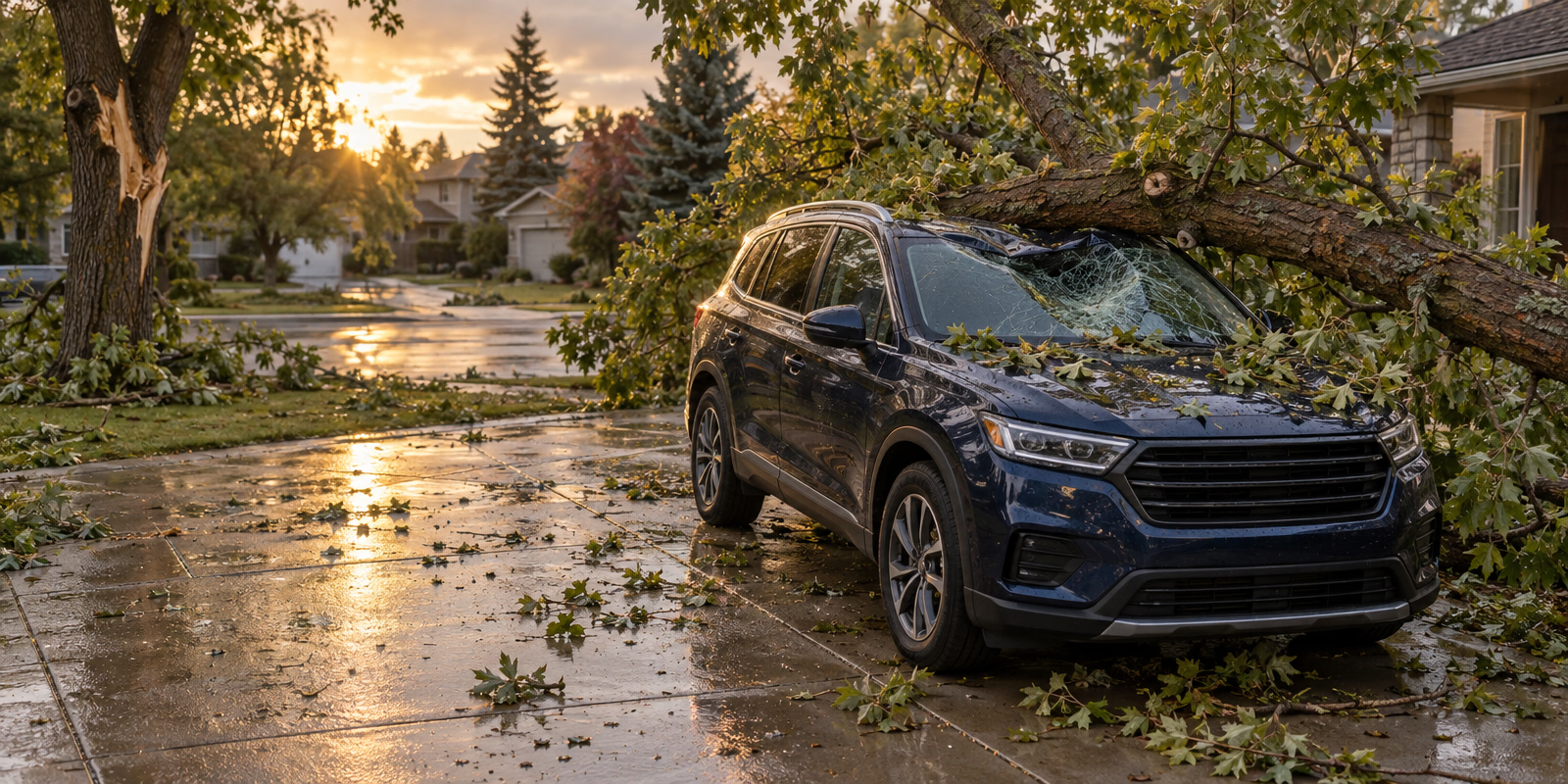
One of the repairs our Foothills team remembers best was a brand-new luxury SUV that a tree came down on. The owners told us they felt defeated when it arrived. That reaction is normal and it is usually wrong, because heavy-looking storm damage on a modern vehicle is often repairable, and the claim behind it is one of the simpler ones in Alberta.
Collision coverage pays when your vehicle hits something or something hits it while it is in traffic. Comprehensive coverage pays for the other category: hail, wind, falling objects, fire, theft, and vandalism. A tree or a large branch coming down on a parked car sits squarely in comprehensive, the same bucket as a Calgary hailstorm. Nobody is assigned fault, because there is no other driver involved for an adjuster to assess.
No at-fault, but the deductible still applies
A comprehensive claim is not an at-fault claim, so it generally should not move your rates the way an at-fault collision can. You still pay your comprehensive deductible, which on many policies is a different number than your collision deductible. Pull up your policy or ask your broker before you decide, especially if the damage looks light.
Photograph the scene before anyone starts cutting. Once the branch is gone, the evidence is gone with it:
After the photos, cover any broken glass with plastic if the vehicle has to sit outside. Insurers expect you to prevent further damage once you know about it, and a rained-on interior can turn a body repair into an electrical diagnosis. Then call your insurer, get a claim number, and have the vehicle towed if it is not safe to drive.
The damage we typically find under a fallen branch
| Area | What we usually see | What the repair involves |
|---|---|---|
| Roof panel | Broad dents, sharp creases where a limb landed | Panel repair or replacement, refinish, sometimes headliner removal |
| A, B and C pillars | Buckling or a slight pinch you can miss by eye | Measuring on the bench, structural repair or sectioning to factory spec |
| Glass and sunroof | Cracked windshield, shattered sunroof, glass in the cabin | Glass replacement plus ADAS recalibration on camera-equipped vehicles |
| Hood, fenders, doors | Dents, deep scratches from bark and branches | Bodywork and refinish, or paintless dent repair where the paint survived |
| Door and glass operation | Doors binding, windows not seating properly | A tell that the opening has moved, which means structural checks |
A roof is not just a lid. It ties into the pillars, and the pillars carry the roof-crush and rollover strength that the vehicle was engineered and tested for. A heavy impact can push a pillar out of spec by a few millimetres, which is invisible standing in a driveway and obvious on a measuring system. That is why we put storm-damaged vehicles on the bench and measure rather than trusting a visual pass, and why a door that suddenly sticks is worth mentioning at the estimate.
Sunroof and headliner damage hides water
When a sunroof breaks, glass and water go into the headliner, the pillar trim, and the seat rails. Modern vehicles run airbag wiring and control modules through those areas. We pull the trim, dry it properly, and scan for faults before anything goes back together, because water damage that is closed up wet resurfaces months later as an electrical fault nobody can trace.
We had an amazing experience at Ultimate Car Care Group Foothills. After a tree fell on our brand new Audi Q8, we were feeling defeated.
On a vehicle that is weeks old, the standard is the manufacturer's published repair procedure, not whatever is fastest. That means the specified welds and adhesives on structural work, the correct glass with the correct urethane, calibration of any camera or radar that was disturbed, and paint blended into the adjacent panels so the roof does not read as a different shade in sunlight. Parts choice matters here too, which our comparison of OEM and aftermarket parts covers in detail.
You also choose the shop on a comprehensive claim, exactly as you do on a collision claim. Your insurer can recommend a shop, and you are free to take the vehicle somewhere else, which our explainer on insurance-recommended shops walks through. Tell your adjuster where the vehicle is going and a good shop handles the paperwork after that.
Your auto policy covers the vehicle, under comprehensive coverage. Home insurance covers your house and property, including the cost of removing the tree from your yard in many policies. If the tree came down on your driveway, expect to open one claim on each policy for the two different kinds of damage.
In a windstorm, a healthy tree coming down is usually treated as an act of nature rather than negligence, and your own comprehensive coverage handles the vehicle. It can be different if the tree was visibly dead or the owner had been warned about it. Document where the tree stood and let the adjusters sort out the rest.
Sometimes, on an older vehicle where the repair cost passes the vehicle's value. On a newer vehicle it is far less likely, because the value is high and a great deal of storm damage is repairable to factory spec. We write a detailed estimate before anyone makes that call, and a second opinion is always worth getting.
Storm damage across the roof, glass, and structure is a multi-week job in most cases, driven by parts availability and the calibration work at the end. Hail damage on the same vehicle would be faster, and our hail guide covers that path. We give you a written timeline with the estimate.
Storm damage on your vehicle?
Book a free estimate and we will document everything your adjuster needs, then repair it to the manufacturer's standard.
Book a Free EstimateAbout the author
Reese Calder · Service Writer, Ultimate Car Care Group
Reese is the service writer for Ultimate Car Care Group and writes the blog from inside the three Calgary shops, translating what the estimators, body techs, glass installers, and detailers see every day into plain answers for drivers.
Calgary's worst hail usually lands in July. Here is what to do in the first 48 hours after a storm dimples your car: the photos to take, the call to your insurer, and how to tell whether it is a paintless dent repair job or bodywork.
Short answer for Alberta drivers: no. You pick the shop. Here's how the "preferred" list actually works, what changes when you choose your own, and how we make the claim painless either way.
Every collision estimate names a part type on every line: new OEM, certified aftermarket, or recycled. Here is what each one means for fit and safety, what insurers usually approve, and how to pay the difference if you want factory parts.