
How to Read a Collision Repair Estimate, Line by Line
Reese Calder · Service Writer, Ultimate Car Care Group · August 20, 2026 · 7 min read
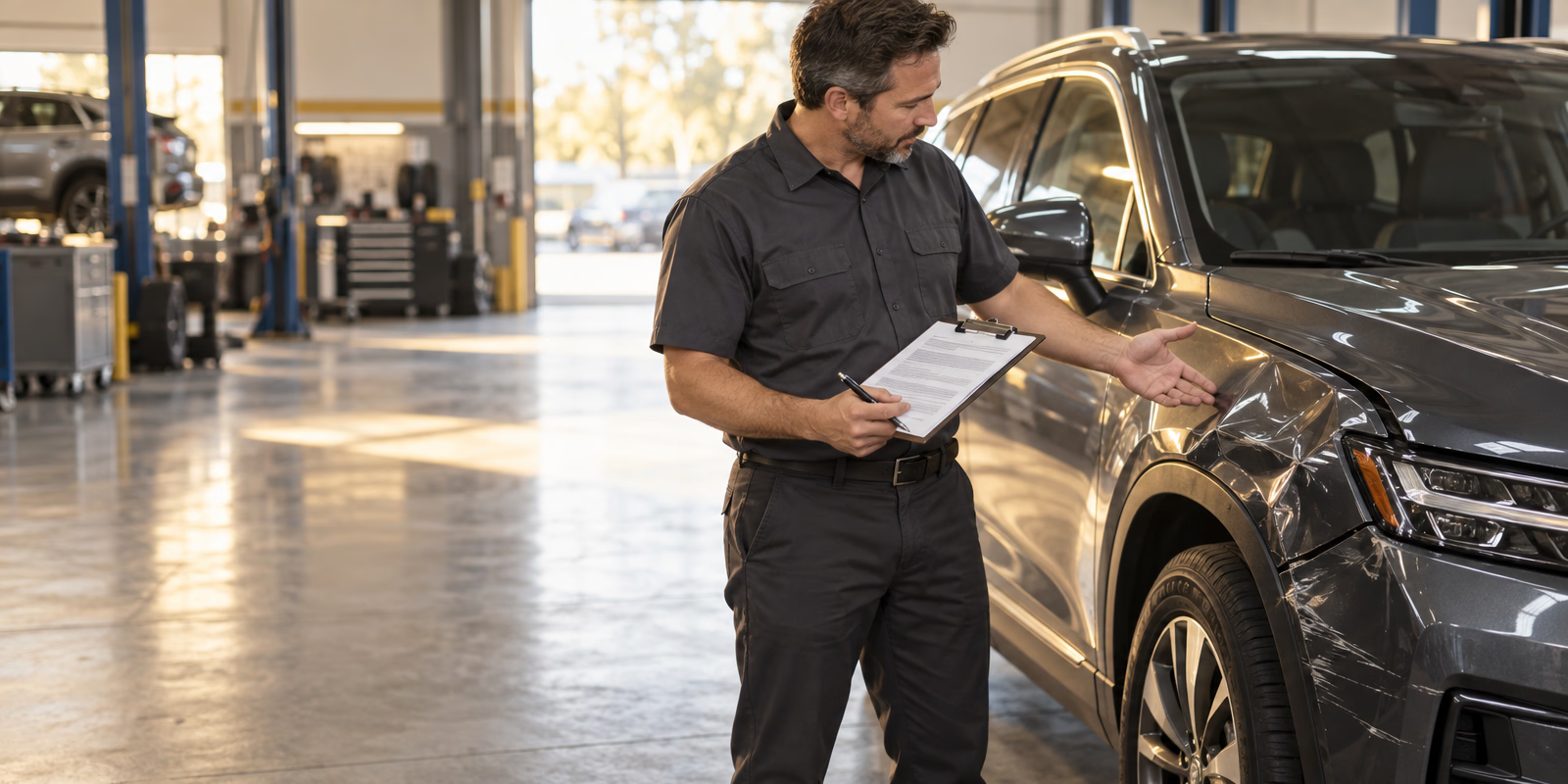
An estimate is a repair plan written in the trade's shorthand. Most drivers scroll to the number at the bottom and sign. The lines above it are the useful part: they say what the shop intends to do to your car, which parts it plans to use, and where the price can still move. Here is how to read one of ours, or anyone else's, without the estimating software.
The header carries your vehicle details, the VIN, the odometer reading, the paint code, and on a claim the file number and adjuster. Check the VIN and the paint code before anything else. A wrong VIN means parts ordered for the wrong trim level, and a wrong paint code sends the colour work down the wrong path before it starts. Paying out of pocket, the claim fields stay blank and the rest reads the same.
Labour is billed in hours, and the hours come from an estimating database that publishes times for each operation on your specific vehicle. The rate per hour differs by labour type, which is why three hours on one line and three hours on another do not carry the same dollar figure.
The labour types on a collision estimate and what each one covers
| Labour type | What it covers | Worth knowing |
|---|---|---|
| Body | Removing and refitting parts, pulling dents, straightening, welding | Usually the biggest block of hours |
| Refinish | Prep, primer, colour, clear coat, plus blend time on the panels beside the repair | Blend time is its own sub-line on metallics and pearls |
| Frame or structural | Setting the vehicle on the bench, measuring, pulling structure back to factory spec | Charged as set-up time plus pull time |
| Mechanical | Suspension, steering, and cooling work the impact touched | Often paired with an alignment line |
| Glass | Removing and refitting glass, or replacing it | Frequently shows up as sublet instead |
Every parts line carries a tag telling you what grade of part it is:
Your policy, not the shop, usually decides which grade the insurer will fund. You can ask for OEM and pay the difference yourself. Our guide to OEM versus aftermarket parts covers where that choice matters for safety and fit, and where an aftermarket part is genuinely fine.
Paint and materials is its own line, calculated from the refinish hours, covering the colour, clear, primer, masking, and abrasives the job actually consumes. Sublet lines are work we send out and manage on your behalf: glass, ADAS calibration, wheel alignment, towing. Both are real costs rather than padding, and both belong itemized on the page instead of folded into a round number.
An estimate is a starting number, not the final bill
A written estimate is built from what can be seen with the panels still on the vehicle. Once the bumper cover or the door trim comes off, hidden damage shows up: a cracked bracket, a bent rail, a soaked connector. That triggers a supplement, which is an addition to the estimate sent to your adjuster for approval before the extra work happens. Supplements are normal on collision repairs. Surprises at pickup are not.
Two lines decide your share. Betterment applies when a repair leaves you better off than you were, most often new tires or a new battery on an older vehicle, and you pay the difference in value. The deductible is the portion your policy says you cover. With direct billing you pay the deductible at pickup and we invoice the insurer for the balance.
Sanity-check the size of the number
A bumper cover repaired and repainted typically runs $500 to $1,200 in Calgary, and one full panel repainted and blended typically runs $700 to $1,800. Our guides to bumper repair costs and repainting a car break those down. A figure well outside the range deserves a question, either because there is damage you cannot see or because something is priced oddly.
Ask these at the counter, and write the answers on your copy:
An estimator who answers those without reaching for vague language is an estimator who has thought about your repair. Ours will walk the vehicle with you and point at the damage behind each line, because a number nobody explains is a number nobody trusts.
Not quite. An estimate prices the damage visible before disassembly and changes when hidden damage turns up. A quote implies a fixed price. Collision shops write estimates, then handle changes through supplements that you or your adjuster approve before the extra work goes ahead.
Almost always a supplement. Teardown exposed damage nobody could see from outside, such as a bent reinforcement bar or a broken bracket behind the bumper cover. The additional work is documented, sent to the adjuster, and approved before it happens, so ask for the supplement paperwork if you have not seen it.
Yes. Alberta drivers choose their own repair facility, and a second estimate is a normal thing to ask for, especially on a large repair or a possible write-off. Our post on getting a second opinion explains when it is worth the trip.
Parts availability drives the calendar more than labour hours do. A small panel repair can be a few days, while structural work with back-ordered parts runs weeks. How long collision repair takes in Calgary goes through the stages and what slows each one down.
Want your estimate explained line by line?
Bring the vehicle or just the paperwork to any of our three Calgary shops and an estimator will walk you through every line before you decide anything.
Book a Free EstimateAbout the author
Reese Calder · Service Writer, Ultimate Car Care Group
Reese is the service writer for Ultimate Car Care Group and writes the blog from inside the three Calgary shops, translating what the estimators, body techs, glass installers, and detailers see every day into plain answers for drivers.
A Calgary driver came in certain her car was a write-off. Her husband works in insurance and had already called it. Our estimate came in far lower and she had the car back within days. Here is how total loss is decided and why a shop estimate can differ.
A scuffed bumper cover and a bent frame rail are different jobs on different clocks. Here are realistic collision repair timelines by damage tier, the five things that push a delivery date later, and how rentals are handled while your vehicle is with us.
Every collision estimate names a part type on every line: new OEM, certified aftermarket, or recycled. Here is what each one means for fit and safety, what insurers usually approve, and how to pay the difference if you want factory parts.