
Deer Collision Season in Alberta: How to Avoid One and What to Do If You Hit One
Reese Calder · Service Writer, Ultimate Car Care Group · September 17, 2026 · 8 min read
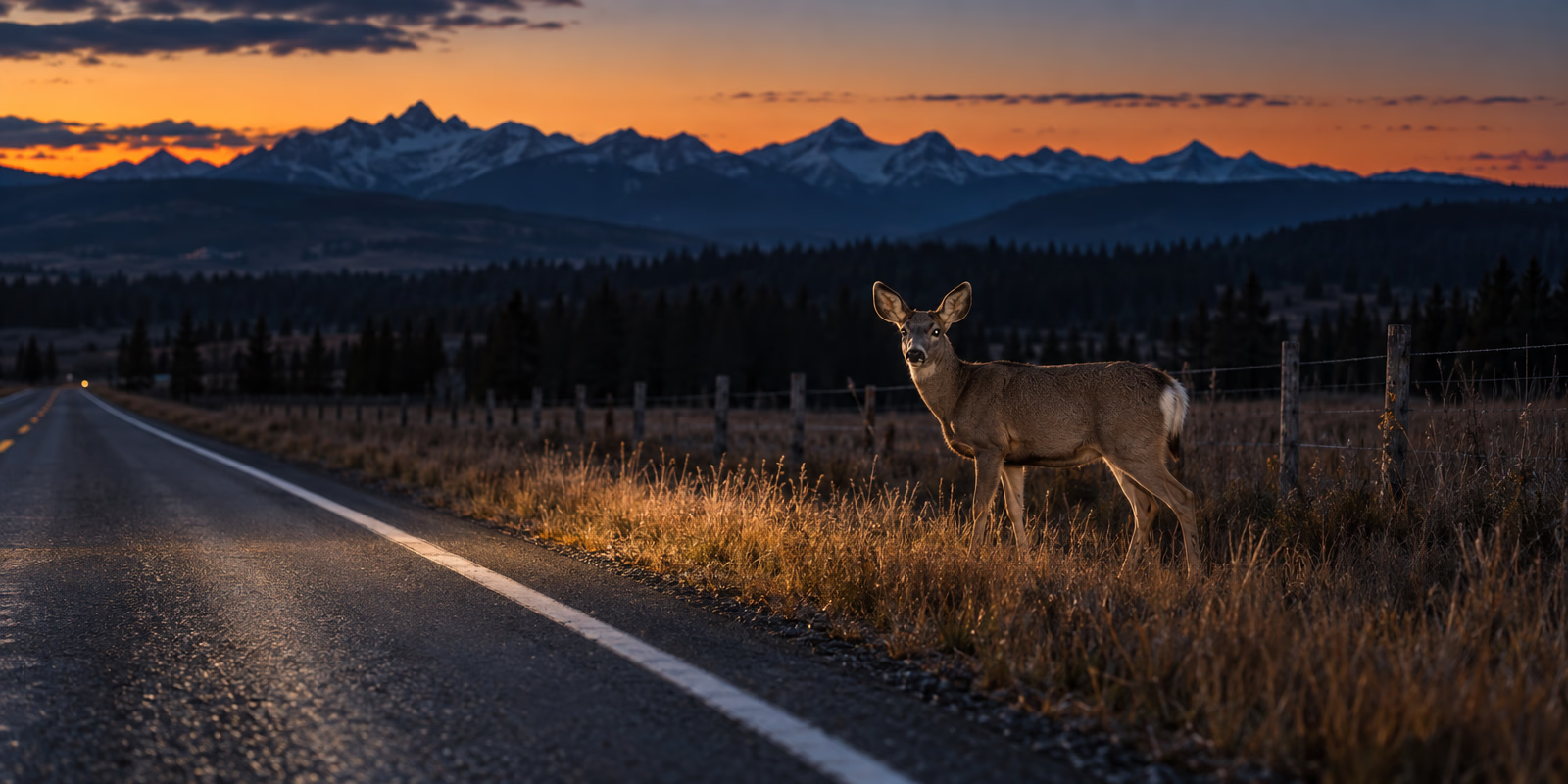
Our front-end work changes character every fall. Through the summer it is parking lots and highway debris. From October on, a steady share of it is deer. Drivers come in shaken, with a caved grille and a story that ends the same way: it came out of the ditch and there was no time. Here is why this season is different, how to lower the odds, and what to do in the minutes and days after a strike.
Three things line up at once. Deer enter the rut, so bucks move constantly and pay no attention to roads. Daylight shrinks, which drops both the morning and evening commute into dusk, the exact hours deer are moving. Crops come off the fields and animals shift toward new cover and feed. Add early snow pushing them down to the valleys and you get Alberta's peak wildlife collision season.
Around Calgary the hot spots are predictable. Highway 1 west toward Canmore, Highway 22 along the foothills, and the Cowboy Trail all run through mixed cover with ditches right against the lanes. Deerfoot and Stoney Trail see strikes too, usually where a green corridor crosses the road.
None of this is complicated, and drivers who do it consistently hit fewer animals:
Brake, do not swerve
This is the single piece of advice worth practising in your head before you need it. Hitting a deer at a reduced speed is a body shop visit. Losing control at highway speed trying to miss it is an ambulance call, an oncoming vehicle, or a ditch rollover. Brake in a straight line, keep both hands on the wheel, and let the animal be the thing that gets hit.
After a strike, work in this order:
In Alberta an animal strike is typically handled as a comprehensive claim rather than a collision claim, and it is generally not treated as an at-fault accident. That distinction matters because comprehensive usually carries a different deductible and is less likely to affect your rating. Every policy is written differently, though, so check your policy wording and confirm with your adjuster before you assume anything.
One thing that trips people up: if you swerve, miss the deer, and hit a ditch, a fence, or another vehicle, that is usually a collision claim instead, with a collision deductible and an at-fault review. It is another reason the advice above is to brake in a straight line. Our walkthrough on what to do after a car accident covers the claim side in more detail.
The damage pattern we see most often on a front-end animal strike
| Area | What we usually find | Why it adds to the repair |
|---|---|---|
| Hood and front fenders | Deep creases, buckled edges, paint torn to bare metal | Often replacement rather than repair, plus blending paint into the doors |
| Grille and bumper cover | Shattered plastic and broken mounting tabs | Sensors and radar mount here, so the replacement has to sit exactly right |
| Radiator and condenser | Punctures, bent fins, coolant on the ground | Driving on a holed radiator risks the engine, which dwarfs the body bill |
| Headlight assemblies | Cracked housings, snapped mounts, moisture inside | Assemblies on newer vehicles are costly and frequently OEM only |
| Sensors and cameras behind the bumper | Knocked out of aim with nothing visibly broken | Needs recalibration before the safety systems work correctly |
| Windshield and A-pillar | Cracks from the animal coming up over the hood | A camera behind the glass means calibration after the replacement |
That second-last row is the one drivers underestimate. A radar unit pushed a few millimetres out of position still looks fine and still reports no fault, yet automatic braking aims from exactly that position. Every front-end repair on an equipped vehicle finishes with an ADAS calibration, and the same applies to glass, covered in our windshield calibration post.
Timelines depend mostly on parts. A bumper cover and a grille move quickly. A hood, a radiator, and a headlight assembly on one vehicle means ordering from several suppliers, and that is what stretches a job. Our post on how long collision repair takes explains where the days go, and your estimate carries a real date.
I brought my car here after hitting a deer. The staff is friendly, the service was finished right when they said it would be and my car looked good as new. Highly recommend going to Ultimate Car Care Group.
Generally no. An animal strike is usually handled under comprehensive coverage, which is not rated as an at-fault collision. Swerving and hitting something else is a different matter and typically goes through collision coverage. Policies differ, so confirm the treatment with your adjuster.
Report it if anyone is injured, if the animal is blocking a lane, or if the damage passes Alberta's reporting threshold, which most front-end strikes do. Use the non-emergency line when nobody is hurt. A file number is useful later, because some insurers ask for one when the claim is opened.
Only if nothing is leaking, no light is out, the hood latches properly, and no bodywork is touching a tire. Coolant on the pavement, steam, a hood that won't latch, or a headlight hanging loose all mean call a tow. A short drive on a punctured radiator can turn a body repair into an engine repair.
They will once the calibration is done, and that is part of the repair rather than an extra. Any vehicle with radar, a forward camera, or parking sensors in the damaged area gets recalibrated to the manufacturer's targets before it leaves. We document the results so you have proof it was completed.
Hit a deer? Bring it in.
Book a free estimate and we will assess the front end, the cooling system, and the sensors, then give you a repair plan and a real timeline.
Book a Free EstimateAbout the author
Reese Calder · Service Writer, Ultimate Car Care Group
Reese is the service writer for Ultimate Car Care Group and writes the blog from inside the three Calgary shops, translating what the estimators, body techs, glass installers, and detailers see every day into plain answers for drivers.
A calm, practical checklist for the minutes and days after a collision in Calgary: how to stay safe, what to document, when you legally have to report it, and how to get your vehicle towed and repaired without losing money or your mind.
If your vehicle has lane-keeping, automatic braking, or adaptive cruise, the answer is almost certainly yes. Here's what calibration is, why a new windshield breaks it, and what happens if you skip it.
A scuffed bumper cover and a bent frame rail are different jobs on different clocks. Here are realistic collision repair timelines by damage tier, the five things that push a delivery date later, and how rentals are handled while your vehicle is with us.