
What to Do After a Car Accident in Calgary: A Step-by-Step Guide
Reese Calder · Service Writer, Ultimate Car Care Group · June 15, 2026 · 8 min read
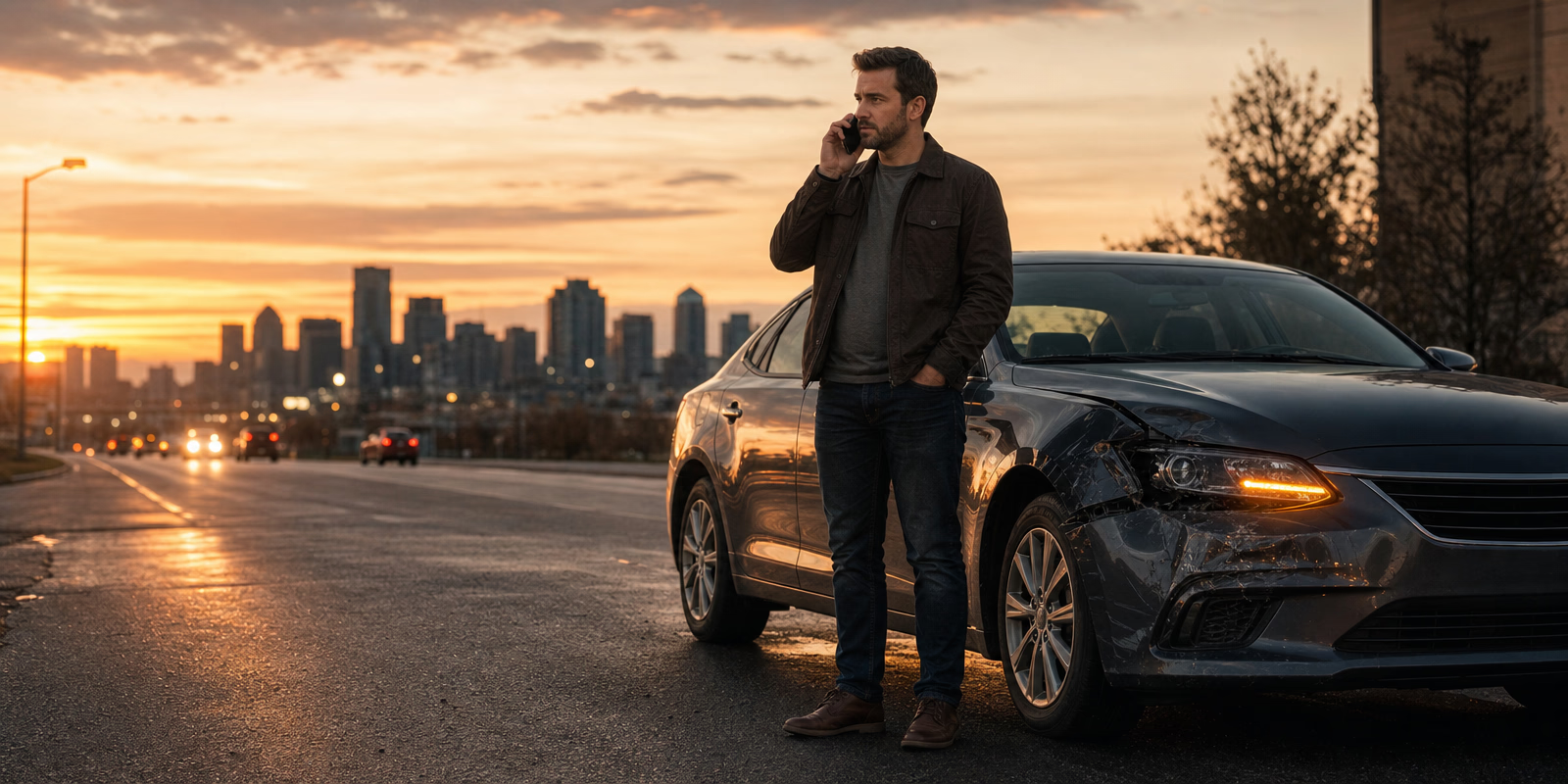
Nobody thinks clearly in the sixty seconds after a crash. Your heart is pounding, traffic is still moving around you, and the part of your brain that handles paperwork has left the building. That is exactly why it helps to have read the steps once before you ever need them. Here is the calm version of what to do after a collision in Calgary, from the first thirty seconds at the scene through getting your vehicle repaired and back in your driveway.
Before anything else, before any photos or paperwork:
When you have to report it
In Alberta you are required to report a collision if anyone is injured or the total damage looks like it could top a couple of thousand dollars, which most two-vehicle hits do. If officers do not attend the scene, you may be directed to report at a police district office or collision reporting centre, usually within 24 hours. When in doubt, call the non-emergency line and ask.
Your phone is your best tool here. Capture all of this while you are still at the scene:
Do not argue fault at the scene
You do not decide fault and neither does the other driver. The insurers do, using the evidence. Stay polite, swap information, document everything, and let the adjusters sort out who pays. Admitting fault on the shoulder can complicate your own claim later.
If your vehicle is leaking fluid, has a flat or damaged tire, will not steer straight, has lights or sensors out, or has body damage rubbing a tire, do not drive it. Call for a tow. We offer towing and rental coordination and can have a damaged vehicle brought straight to whichever of our shops is closest to you, so it is not sitting in an unfamiliar yard racking up storage fees while you figure out the next step.
Be careful where the tow truck takes it
After a crash you will sometimes be offered a tow to a yard or a shop you did not choose. You are never obligated to have your vehicle repaired wherever it gets towed. Have it taken home, to a secure lot, or directly to the shop you want to use. Storage and access fees at an unfamiliar yard add up fast.
Once you are safe and home, the clock on your claim starts:
Quick reference: the situation and your first move
| Situation | First move |
|---|---|
| Anyone injured | Call 911 before anything else |
| Cars drivable, no injuries | Move out of traffic, hazards on, exchange info |
| Vehicle leaking or won't steer | Do not drive it, call for a tow |
| Other driver wants to settle in cash | Politely decline, document, report through insurance |
| Other driver leaves the scene | Note the plate, photograph everything, report it |
In Alberta you choose the body shop. Your insurer can recommend one from their preferred network, but they cannot force you to use it, and steering you is against the rules. We walk through exactly how that works in our explainer on insurance-recommended shops. The short version: pick a shop you trust, tell your adjuster, and a good shop handles the rest. If you want to know what the repair itself looks like once you have chosen, our collision repair walkthrough covers the whole flow from estimate to pickup.
If the other driver is clearly at fault, your insurer pursues their insurer, and depending on the details you may not pay a deductible at all. If the other driver has no insurance or leaves the scene, Alberta drivers are generally still protected through their own coverage, though the specifics depend on your policy. Either way, the process on your end is the same: document everything, open your claim, and let your adjuster chase the other side. You do not have to play detective.
Got rear-ended on Glenmore and had no idea what to do. They arranged the tow, handled my adjuster, put me in a rental the same day, and the car came back perfect. Took all the stress off me.
If there are no injuries and the damage is clearly minor, officers may not attend the scene, but you should still exchange information and report it promptly if the damage could exceed a couple of thousand dollars. When unsure, call the non-emergency line and ask. It is free and it protects you.
Only if it is clearly safe: no fluid leaks, no warning lights, tires and steering normal, no panels rubbing a tire, and all lights working. If anything is off, get it towed. Driving a compromised vehicle can turn a repairable car into a write-off.
Sooner is always better. Most policies want prompt notice, and the fresher your photos and memory, the smoother the claim. You can open a claim before you have chosen a shop.
A genuinely not-at-fault claim generally should not raise your rates the way an at-fault claim can. The adjusters assign fault based on the evidence, which is exactly why documenting the scene matters so much.
No. You choose the shop, full stop. If your vehicle was towed somewhere you did not pick, you can have it moved to the shop you want, and we can coordinate that move for you.
Been in a collision?
We will coordinate the tow, deal with your insurer, and get you into a rental while we make it right.
Book a Collision EstimateAbout the author
Reese Calder · Service Writer, Ultimate Car Care Group
Reese is the service writer for Ultimate Car Care Group and writes the blog from inside the three Calgary shops, translating what the estimators, body techs, glass installers, and detailers see every day into plain answers for drivers.
From drop-off to pickup, a clear walkthrough of the collision repair process and how we handle your insurance so you can get back on the road faster.
Short answer for Alberta drivers: no. You pick the shop. Here's how the "preferred" list actually works, what changes when you choose your own, and how we make the claim painless either way.
Calgary is the hail capital of Canada. Here's an honest range on what hail repair actually costs, when paintless dent repair works vs a full repaint, and how to keep your insurance premium from spiking after a claim.