
Check Engine Light On? What It Means and What to Do in Calgary
Reese Calder · Service Writer, Ultimate Car Care Group · July 6, 2026 · 7 min read
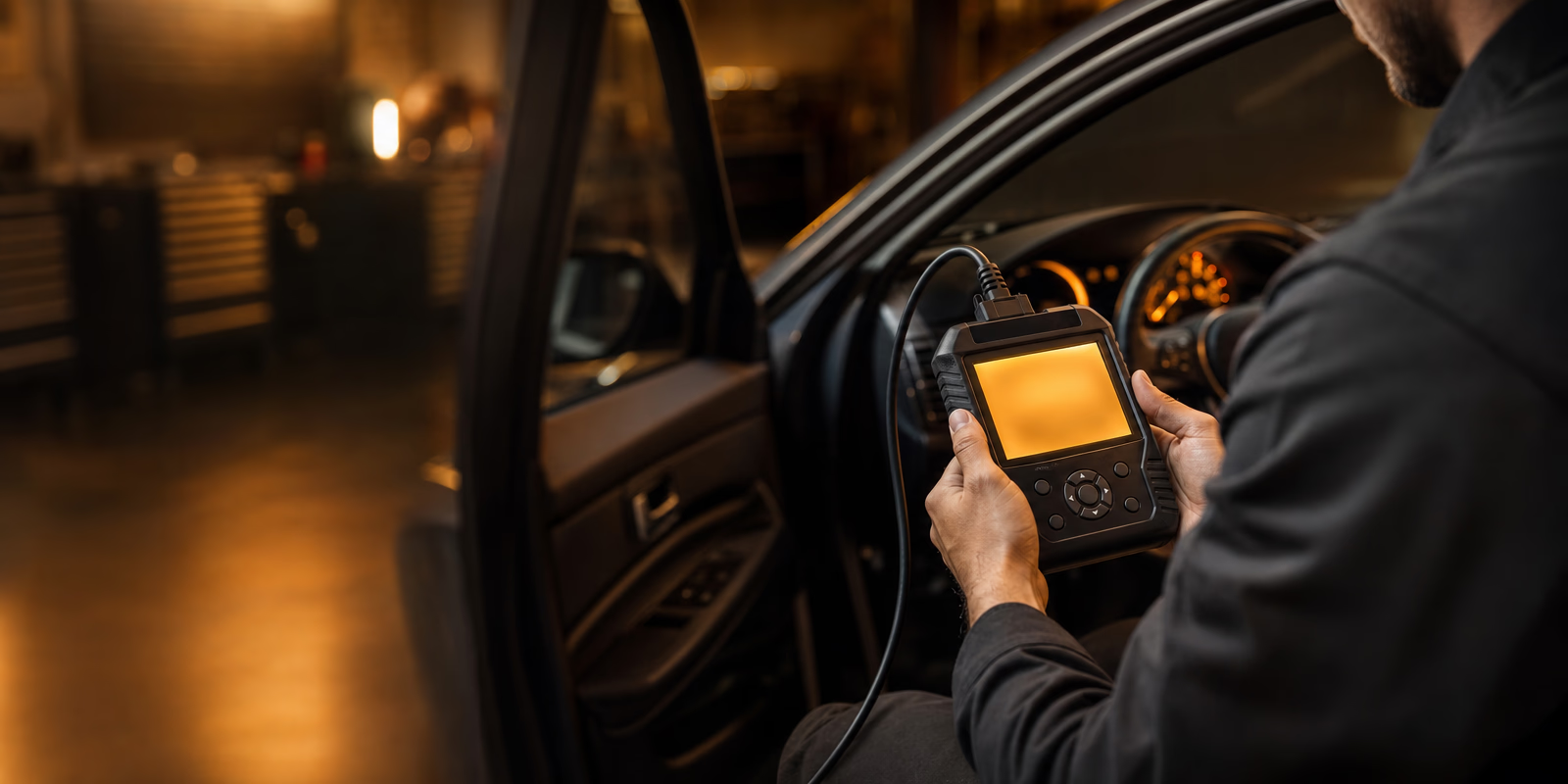
The check engine light is the most misunderstood warning on the dash. Some drivers panic at it and some ignore it for months, and both can be the wrong call. The truth is that the light is a messenger, not a diagnosis. It means the car's computer has logged a fault code, and that code can point at anything from a loose gas cap to a failing catalytic converter. Here is how to read the situation calmly, what is safe to drive on, and when to get it scanned properly.
Before anything else, look at how the light is behaving. This single detail changes what you should do in the next five minutes.
What the light's behaviour is telling you
| Light | What it usually means | What to do |
|---|---|---|
| Steady / solid | A fault is logged, but nothing is actively being damaged right now | Safe to drive gently; book a scan soon |
| Flashing / blinking | An active misfire is dumping raw fuel into the exhaust and can wreck the catalytic converter | Ease off, reduce speed, and get it looked at right away |
| Light plus temperature or oil warning | A second system is involved (overheating, oil pressure) | Pull over safely and stop; do not keep driving |
A flashing light is the one to respect
A steady check engine light rarely means stop-the-car-now. A flashing one does. It signals a live misfire, and continuing to drive hard on it can turn a spark-plug job into a catalytic converter replacement, which is one of the more expensive repairs on the car. If it is flashing, go easy and get in soon.
Not every light is bad news. Some of the most common triggers are minor:
Try the gas cap first
If the light came on right after a fill-up and it is steady, check that the gas cap clicked shut. Re-tighten it and drive normally. If that was the cause, the light often clears on its own within a few driving cycles. If it is still on after a day or two, it is time for a scan.
A parts store will read your code for free, and that is genuinely useful as a first clue. The catch is that a code is a symptom, not a cause. A code like "P0171 system too lean" can be a vacuum leak, a weak fuel pump, a dirty airflow sensor, or a failing oxygen sensor. The scanner tells you which system is unhappy, not which part to buy. Replacing the part the code seems to name, without confirming it, is how people spend money twice. A proper diagnostic reads live sensor data, checks freeze-frame conditions, and isolates the actual fault before anyone touches a wrench.
A reasonable rule of thumb:
It also matters for your out-of-province inspection
If you are bringing a vehicle into Alberta or getting an out-of-province inspection, an active check engine light will fail the emissions portion. Sorting the code out before the inspection saves you a re-test fee and a second trip.
We plug into the vehicle, pull all stored and pending codes, and read the live data the code was captured against. From there we tell you three things in plain language: what the fault actually is, whether it is safe to keep driving, and what the fix costs. If it turns out to be a mechanical repair, we can handle it on the mechanical repairs side in the same visit. No mystery, no upsell on parts you do not need.
Light came on before a road trip and the parts store told me to replace a sensor. These guys scanned it properly, found it was actually a vacuum hose, and fixed it for a fraction of what the sensor would have cost. Saved my trip.
Sometimes. If the trigger was minor and temporary, like a loose gas cap or a single bad tank of fuel, the light can clear on its own after several drive cycles once the computer sees the fault has stopped. If it has been on for more than a couple of days, assume it needs a scan.
It depends entirely on the cause and whether the light is steady or flashing. A steady light on a car that drives normally is usually okay for a few days. A flashing light, or a light alongside a temperature or oil warning, means you should get in right away or stop driving.
A proper diagnostic is an inexpensive, worthwhile step compared to guessing. It often pays for itself immediately by preventing you from buying the wrong part. We tell you the fault and the repair cost before any work goes ahead.
Yes. Extreme cold can affect sensor readings and battery voltage enough to trip a code, and a weak battery on a deep-freeze morning is a common culprit. If the light appears during a cold snap, still get it scanned, because a real fault and a cold-weather quirk look the same from the driver's seat.
No. We have the scan tools and the data access to diagnose modern vehicles across all makes, the same as we do for ADAS and other electronic systems. You choose where the work is done.
Check engine light staring at you?
Book a diagnostic scan and we will tell you exactly what it is, whether it is safe to drive, and what the fix costs.
Book a Diagnostic ScanAbout the author
Reese Calder · Service Writer, Ultimate Car Care Group
Reese is the service writer for Ultimate Car Care Group and writes the blog from inside the three Calgary shops, translating what the estimators, body techs, glass installers, and detailers see every day into plain answers for drivers.
Winter is hard on a Calgary vehicle in ways you cannot always see. Once the roads dry out, a short list of spring jobs undoes the salt, gravel, and pothole damage before it turns into expensive repairs. Here is the checklist we run on our own families' cars.
Calgary winters are hard on vehicles. Here's a simple checklist to keep your car safe, reliable, and looking good through the cold months.
Six honest signs your alignment is off, why Calgary's pothole season makes this a more frequent service than the maintenance book suggests, and what an alignment actually fixes (and doesn't).