
Suspension Warning Signs After a Pothole or Curb Hit in Calgary
Reese Calder · Service Writer, Ultimate Car Care Group · August 27, 2026 · 8 min read
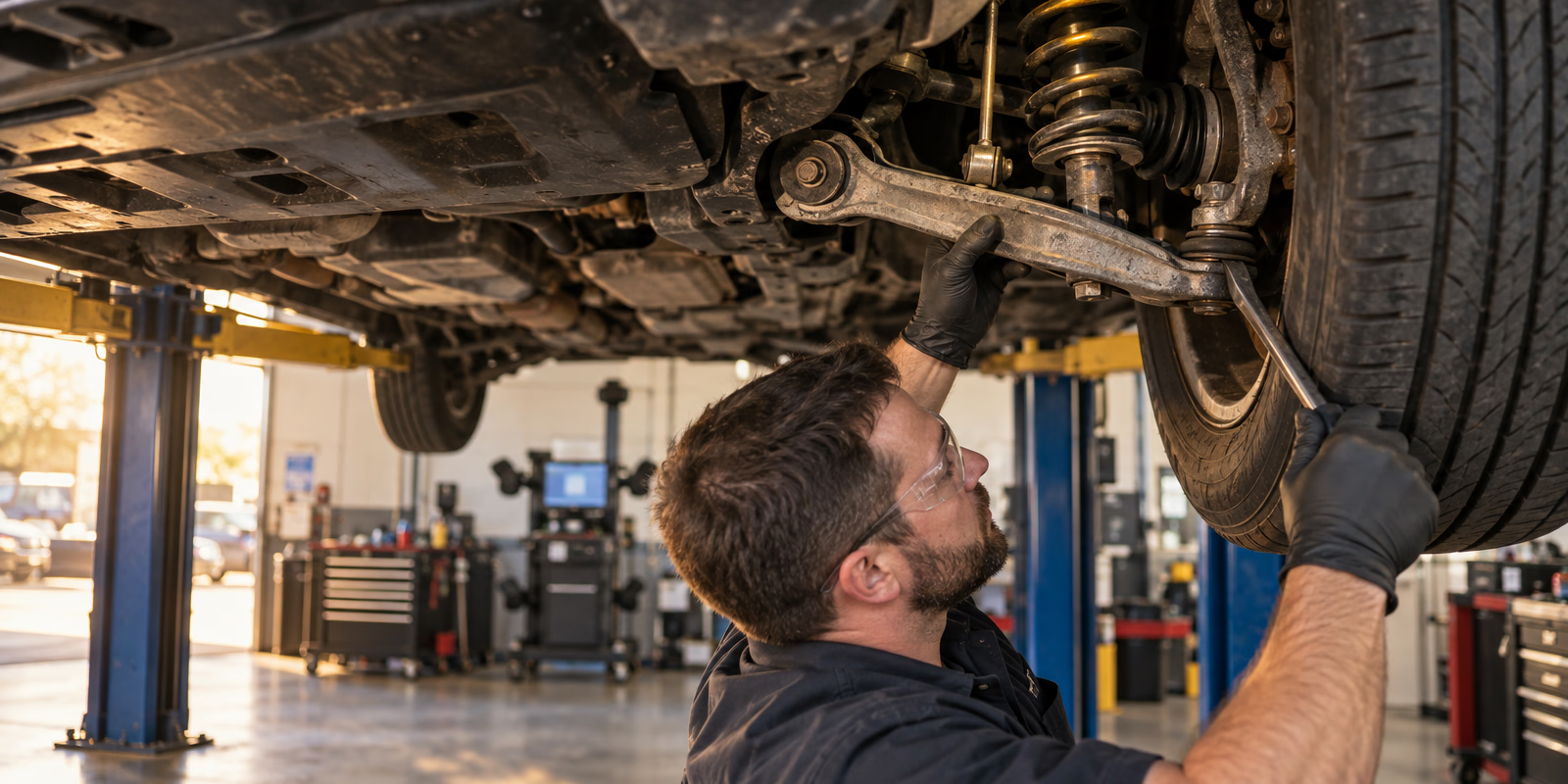
Calgary gives a suspension two seasons of punishment. Spring freeze-thaw opens potholes on Glenmore and Macleod, construction season leaves lips and steel plates everywhere until October, and winter hides curbs under snow in every parking lot. Most hits do no harm. Some bend a control arm or shove the alignment out of spec, and the vehicle tells you in ways that are easy to misread. Here is how to read them.
One hard impact can move several things at once, so treat the table below as a starting point rather than a diagnosis. The pattern matters too: a symptom that appeared the same day as the hit points somewhere different than one that crept in over a season of driving.
Suspension and steering symptoms, the usual cause, and how soon to act
| What you notice | What it usually points at | How urgent |
|---|---|---|
| A clunk or knock over bumps and rail crossings | Sway bar links first, then ball joints or control arm bushings with play in them | Book this week. A loose joint gets worse quickly |
| The steering wanders, or the car pulls on a flat road | Alignment knocked out of spec, or worn tie rod ends letting the geometry move as you drive | Book this week |
| The steering wheel sits off-centre while you track straight | Toe pushed out of spec by the impact, sometimes a bent tie rod or control arm | Book this week |
| The nose dives hard under braking, or the car keeps bouncing after a bump | Struts or shocks past their life, or one damaged by the hit | Book soon. Worn struts lengthen stopping distance |
| Uneven or feathered tire wear | Alignment out of spec, or a worn component on that one corner | Book now. Tire wear is money leaving every day |
| A vibration that arrives at highway speed | A bent rim or a thrown wheel weight, which is a tire and wheel job before it is a suspension one | Book this week |
| Rubbing or grinding through a turn since the hit | Something contacting where it should not: a bent shield, a damaged bearing, a shifted component | Urgent. Have it looked at before the next long drive |
The vibration line is worth separating out. A wheel that took the edge of a pothole can be bent without a mark on the tire, and no alignment will settle it. That one belongs on a balancer at our tires and wheels side first, and only then on the alignment rack.
Suspension geometry is measured in fractions of a degree. A control arm can be bent well past spec and still look straight to the eye, because the bend is smaller than the shadow it casts. The same goes for a subframe that has shifted a few millimetres on its mounts after a solid curb strike in a snowy lot.
That is why we measure instead of looking. A four-wheel computerized alignment on a level rack puts real numbers on camber, caster and toe and compares them against the manufacturer's specification for your vehicle. If the hit was hard, or the numbers do not add up, the vehicle goes on the frame measuring system so every reference point can be compared against factory tolerances.
An alignment cannot hold on worn or bent parts
If a ball joint, tie rod end, or control arm bushing has play in it, the geometry moves around as you drive and the alignment will not stay in spec. We inspect the front end before the rack every time. A shop that aligns a worn front end without saying anything is selling you the same service again in three months, which is why our mechanical repairs quotes sometimes come back as alignment plus a part.
A rough triage after a hit:
The vehicle goes up on the hoist first. We check every joint for play by hand and with a pry bar: ball joints, tie rod ends, sway bar links, control arm bushings, and strut mounts. We look for damp or streaked struts and shocks, torn boots, and bright marks on a control arm or a shield where something made contact.
Then it comes down onto the alignment rack with sensors clamped to all four wheels, and you get the before and after readings rather than a verbal summary. Where the numbers point past alignment, we measure the structure. How to tell if you need a wheel alignment covers the cadence for routine checks, and an alignment is generally under $200 against a set of tires that runs many times that.
Our mechanical work stays inside a defined scope: alignment, suspension repair, steering service, and frame measurement with light straightening. Engine and transmission work sits outside it, and if your vehicle needs something we do not do, you get told straight rather than quoted for the wrong repair.
If nothing changed in how it drives, sounds, or tracks, you can wait for your next service. Do check the tire and the rim edge for a bulge, a cut, or a flat spot, because a pothole hit that misses the suspension often catches the wheel. Any new noise, pull, or off-centre steering wheel deserves a measurement.
From the driver's seat you usually cannot, which is why the inspection comes before the rack. Alignment moves the angles. A worn joint lets them move on their own. The hoist check finds play in seconds, and the alignment readout shows whether the numbers are out and by how much on which corner.
A hard one can shift a unibody or a subframe enough to matter, even with no visible damage. That is what the measuring system is for: every reference point compared against factory tolerances. Where the shift is within a correctable range we straighten it, and where it is structural damage we tell you it belongs in a collision repair.
Yes. Replacing a control arm, tie rod end, strut, or anything that changes ride height moves the geometry, so an alignment is part of the job rather than an upsell afterward. We recheck and road test the vehicle before handing the keys back.
Something changed after that pothole?
Book a suspension and alignment inspection at one of our three Calgary shops. You get the measurements and a written price before any part is replaced.
Book an InspectionAbout the author
Reese Calder · Service Writer, Ultimate Car Care Group
Reese is the service writer for Ultimate Car Care Group and writes the blog from inside the three Calgary shops, translating what the estimators, body techs, glass installers, and detailers see every day into plain answers for drivers.
Six honest signs your alignment is off, why Calgary's pothole season makes this a more frequent service than the maintenance book suggests, and what an alignment actually fixes (and doesn't).
A power tailgate that drifted out of alignment and set off the alarm every time it failed to latch turned out to be hardware, not electronics. Here is the long list of jobs a body shop with a mechanical bay handles that drivers assume belong at the dealer.
September and October are the cheapest weeks of the year to fix what summer did to your car, before the first hard freeze turns a rock chip into a crack and the winter tire rush fills every bay in the city.