
Hit and Run in Calgary: What to Do, Step by Step
Reese Calder · Service Writer, Ultimate Car Care Group · August 3, 2026 · 7 min read
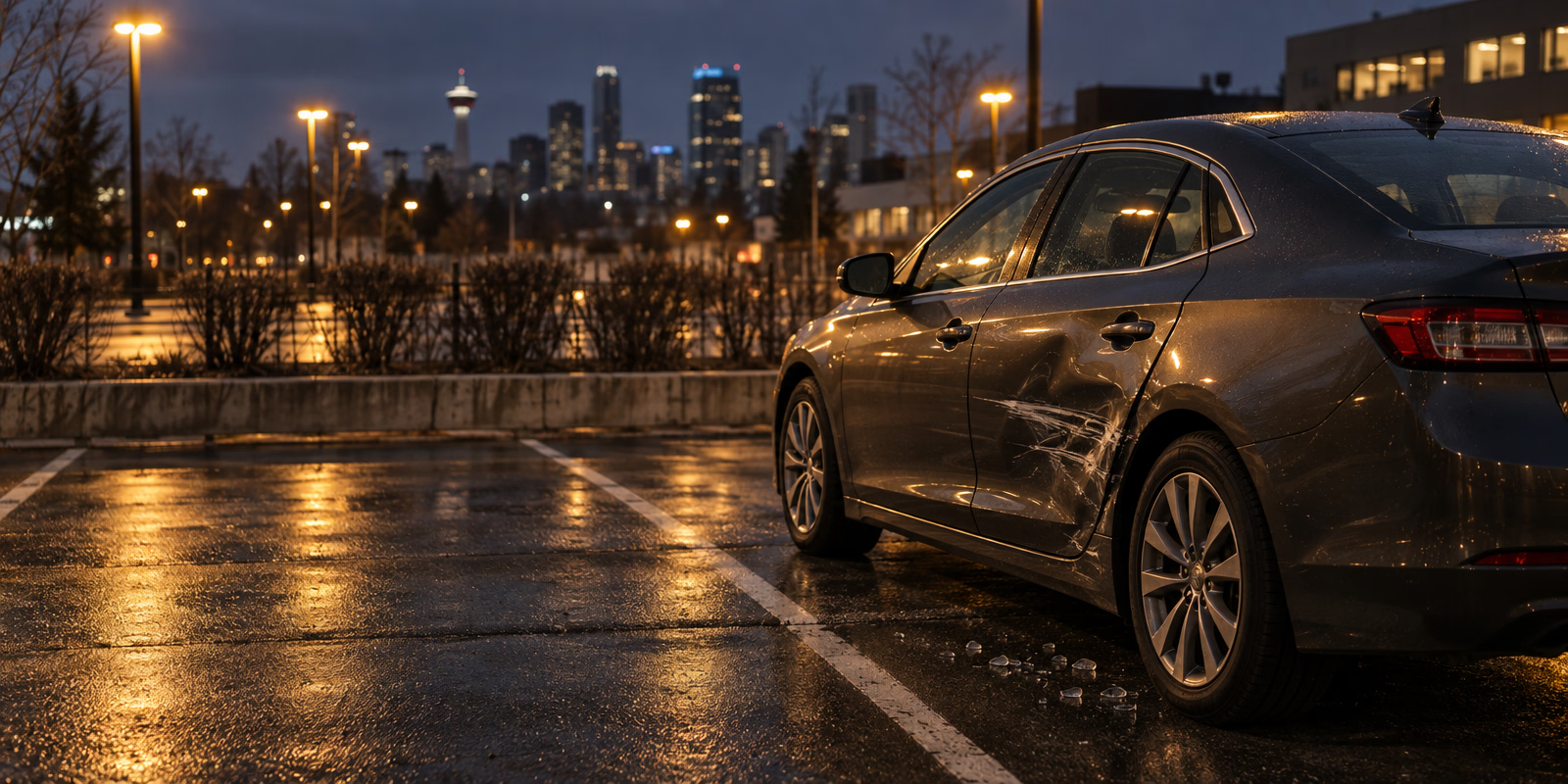
A hit and run leaves you with damage and no one to trade information with. It happens both ways in Calgary: a driver clips you on 17th Ave and keeps going, or you walk out to a parking lot at Chinook and find a creased door and an empty space beside you. The steps below work for either version, and the order matters, because the evidence you collect in the first twenty minutes is what your claim rests on.
Before anything else:
Chasing the other driver makes things worse
It is a natural reaction and it is the wrong one. Following an unknown driver who just fled turns a property-damage claim into a safety problem, and it takes you away from the scene where the evidence is. A partial plate and a clear photo of your own damage are worth far more to your claim than a pursuit down Macleod Trail.
Your phone is the most useful tool you have right now. Capture all of it:
Save the dashcam clip right now
Most dashcams loop and overwrite themselves in a matter of hours. If you have one, lock or export the clip before you drive home, and copy it off the card to your phone or laptop the same day. The vehicle parked beside yours may have a parked-mode clip as well, and people are usually happy to check.
Report it. A hit and run is an offence, and your insurer will ask for the police file number. For a minor collision with no injuries, the Calgary Police Service offers online collision reporting, which is usually faster than attending a district office. If anyone is injured, or the other vehicle is still nearby, call police rather than filing online. In Alberta you are expected to report promptly, generally within 24 hours, so do it the same day if you can.
This is where most people expect bad news and often get a better answer than they feared. Damage caused by a vehicle that cannot be identified is typically handled under your own collision coverage, with your collision deductible applying. Wording varies by insurer, so check your policy or ask your adjuster directly rather than guessing. Comprehensive coverage handles the other category of no-fault damage: hail, falling objects, and vandalism.
A rough guide to how these claims usually land in Alberta
| What happened | Usually claimed under | Deductible |
|---|---|---|
| Another vehicle hits you and drives off | Your own collision coverage | Usually applies, check your policy |
| Your parked car is hit overnight | Your own collision coverage | Usually applies |
| The other driver is identified afterward | Their liability coverage | Often refunded once fault is settled |
| Someone keys or vandalizes the vehicle | Comprehensive coverage | Comprehensive deductible applies |
| Damage is smaller than your deductible | Nothing, pay it directly | No claim opened |
One thing worth knowing before you call: a genuinely not-at-fault claim generally should not affect your rates the way an at-fault claim can, and a hit and run is not your fault. Your adjuster decides that based on the evidence, which is the whole reason the photos and the police file number matter so much. If the damage looks small, get a written estimate before you open a claim at all.
Highly recommend this company to everyone!
Bring the vehicle to whichever of our shops is closest and we will write a free estimate with photos of every damaged panel. If the number is close to your deductible, you now have real figures for the claim-or-pay decision, and our bumper cost guide covers what that side usually runs. If you claim, we deal with your adjuster and bill them directly so you pay only your deductible at pickup.
You choose the shop, not your insurer and not whoever towed it. That right holds on a hit and run claim exactly as it does on any other, and our explainer on insurance-recommended shops walks through how it works in Alberta. If you are unsure what to do at the scene of any collision, our step-by-step accident guide is the longer version of the list above.
Report it. Even a small scrape costs more to fix than people expect, and your insurer will ask for a police file number if you claim later. Filing takes a few minutes online for a minor collision with no injuries, and it protects you if the damage turns out to be deeper than it looked.
A hit and run is not an at-fault claim for you, so it generally should not move your rates the way an at-fault collision can. Your deductible is the part you are most likely to pay. Confirm the specifics with your adjuster, because policy wording differs between insurers.
Give it to police anyway. A partial plate with a make, colour, and location is more useful than people assume, especially combined with camera footage from a nearby business. Even if the driver is never found, the report supports your claim.
Yes. Leaving the scene of a collision without exchanging information is the same offence whether the vehicles were moving or parked. Photograph the damage and the space, ask the business about camera coverage, and report it the same day.
Hit by a driver who took off?
Bring it in for a free estimate and we will document the damage properly for your claim.
Book a Free EstimateAbout the author
Reese Calder · Service Writer, Ultimate Car Care Group
Reese is the service writer for Ultimate Car Care Group and writes the blog from inside the three Calgary shops, translating what the estimators, body techs, glass installers, and detailers see every day into plain answers for drivers.
A calm, practical checklist for the minutes and days after a collision in Calgary: how to stay safe, what to document, when you legally have to report it, and how to get your vehicle towed and repaired without losing money or your mind.
Short answer for Alberta drivers: no. You pick the shop. Here's how the "preferred" list actually works, what changes when you choose your own, and how we make the claim painless either way.
Bumper damage ranges from a scuff you can polish out to a full replacement with sensors behind it. Here is an honest Calgary cost breakdown, when a bumper can be repaired instead of replaced, and why modern bumpers cost more than they used to.