
When Should I Put Winter Tires On in Calgary?
Reese Calder · Service Writer, Ultimate Car Care Group · September 14, 2026 · 7 min read
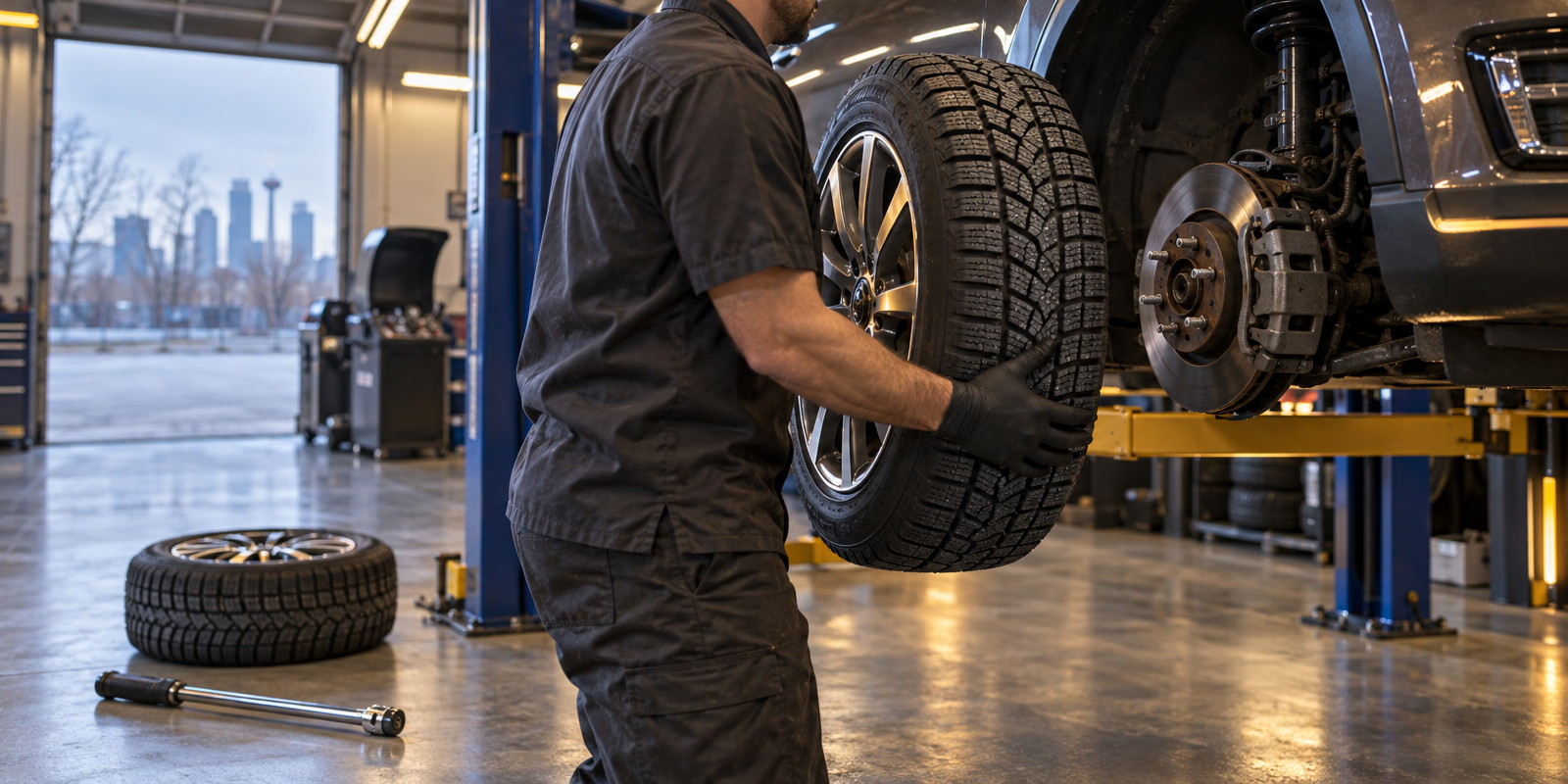
Every September the phones start with the reverse of the spring question: "When do I need to put the winters back on?" The rule our tire team uses is the same one we use in the spring, just running the other direction. It isn't a date on the calendar and it isn't the first snowfall. It's a temperature, and in Calgary that temperature shows up well before the snow does.
Summer and all-season tires use a harder rubber compound that grips well on warm pavement. Below about 7 °C that compound stiffens, the contact patch stops conforming to the road, and braking distances get longer on cold dry asphalt before a single flake falls. Winter compounds stay flexible in the cold. So the cue to swap is a stretch of daytime highs sitting at or below 7 °C, not the first storm.
Calgary gets there in early October most years
Watch the 10-day forecast rather than waiting for snow. Calgary regularly sees its first snowfall in October and has had it in September, and the temperature threshold arrives before that. If your morning commute is starting near freezing and afternoons are in single digits, you are already past the swap point.
A good all-season tire is a compromise built for a milder climate than ours. It handles a wet fall day fine and it will get you through a light dusting. On packed snow at minus 25, or on the black ice that forms on Deerfoot overpasses first, it cannot match a dedicated winter. The giveaway is the sidewall: a true winter tire carries the three-peak mountain snowflake symbol, and an all-season usually does not.
Pull one tire out of the stack in September and look it over. Five minutes now beats finding out in a snowstorm:
The first real snowfall generates a week of phone calls in a single morning, at every shop in the city. Book in September and you pick your date. Call after the first storm and you drive on summer rubber for a week or more waiting for a bay. This is item two on our fall car care checklist, and it is the one with the hardest deadline.
A rough Calgary fall timeline most years
| Window | What's usually happening | What to do |
|---|---|---|
| Early September | Warm afternoons, shops still quiet | Book an early-October swap |
| Late September | First frost, overnight lows near zero | Check the winter set's tread and sidewalls |
| Early to mid October | Highs in single digits, first snow possible | Swap to winters |
| Late October onward | Snow sticking, bays booked a week out | Too late to be calling around |
If your winters sit on their own rims, each rim needs a working tire pressure sensor, and those sensors have sealed batteries that do not last forever. A sensor that died over the summer shows up as a dash light the day after the swap. We read the sensors during the changeover and tell you before you leave. We also set the cold pressures to the door-jamb spec, which is usually higher than drivers guess.
Wash the summer set before it goes into storage
Brake dust and road grime hold moisture against the rim all winter. Have the summer set cleaned and bagged, stored out of sunlight and off a concrete floor, or leave them with us. Ours come back cleaned, balanced, and ready for the spring swap you already know is coming.
A summer of Calgary construction and patched pavement pulls alignment out of spec, and winter is the worst season to drive on it. Misalignment scrubs tread off a brand-new winter set and makes the car wander on packed snow. The wheels are already off during a swap, so this is the cheapest moment of the year to check it. Here are the signs you need an alignment if you want to check yourself first.
We just had some damage repaired on our front end on our 2019 Durango and had paint protection film installed on the whole front end and brand new winter tires installed as well.
No. Alberta doesn't mandate winter tires or set changeover dates the way Quebec and parts of BC do. The decision is yours, which is why the 7 °C rule is the useful guide here. Some mountain parkways post seasonal tire requirements, so check before a trip west.
A couple of warm weeks won't hurt much, but a full month of afternoons above 7 °C wears the soft winter compound quickly and lengthens braking on warm pavement. Aim for the temperature window rather than being first in line. Our post on taking them off in spring covers the other end of the same rule.
About an hour if your winters are already mounted on a second set of rims. Longer if we're remounting tires onto your existing wheels, because each one has to be broken down, mounted, and balanced. Book ahead during the October rush and you avoid the wait entirely.
Four. Two winters on the front of a front-wheel-drive car gives you grip to accelerate and none to hold the back end in a corner, which is how a mild skid becomes a spin. Every tire manufacturer and our tire techs say the same thing: match all four.
Beat the October rush
Book your winter tire changeover now at the Ultimate Car Care location nearest you and pick the date that suits you.
Book a Tire SwapAbout the author
Reese Calder · Service Writer, Ultimate Car Care Group
Reese is the service writer for Ultimate Car Care Group and writes the blog from inside the three Calgary shops, translating what the estimators, body techs, glass installers, and detailers see every day into plain answers for drivers.
The honest answer for Calgary drivers: it's not a date on the calendar, it's a temperature. Here's the rule we use on the shop floor, plus how to tell when your winters are toast.
September and October are the cheapest weeks of the year to fix what summer did to your car, before the first hard freeze turns a rock chip into a crack and the winter tire rush fills every bay in the city.
Six honest signs your alignment is off, why Calgary's pothole season makes this a more frequent service than the maintenance book suggests, and what an alignment actually fixes (and doesn't).